


Choosing between DIY brand registration and hiring an IP agent in Malaysia depends on process complexity and risk tolerance. DIY keeps you closer to official fees alone, yet classification mistakes and office actions often stretch the path; professional representation adds service fees and is built to prevent critical errors during formal examination and publication phases. Your real decision is which risks you can absorb while you safeguard your commercial identity.
3 Paths to brand protection in Malaysia: how to choose
Securing brand name protection (trademark) in Malaysia depends on your expansion goals and operating model. weigh an international filing (Madrid Protocol) against separate national filings; a team unsure how far the brand will travel benefits from an early exposure review with an Intellectual Property Malaysia & Singapore, Trademark specialist before money goes on the wrong route.
Filing directly through the Intellectual Property Corporation of Malaysia secures your local legal monopoly (exclusive right). Choosing a national pathway fits domestic businesses. Expanding overseas requires an international filing. Make the pathway choice before you lock class lists and fees.
Tip: Evaluate whether your business operates physically or digitally before deciding on a filing pathway.
Trademark classes cover goods and services: match the filing to what you sell
Under the Malaysian Trademarks Act 2019, the term trademark covers signs used for goods and for services; you do not pick a separate legal “service mark” statute. You still must classify correctly: physical products (for example clothing) go in goods classes, while consulting, hospitality, or similar activities go in service classes under the same trademark system and the same registration process.
To choose correctly, evaluate what you actually deliver to customers. Registering under the wrong class leaves those offerings exposed to lookalike traders. Other intellectual assets need different tools: inventions need patents, creative works rely on copyright. If you want professional guidance across those areas, review the firm’s IP service options and align the filing with your core revenue model. More on this: EXY IP Services.
Select the class map that matches how you earn money, then file on that basis.
Patents protect function, not your trading name
Patents secure functional inventions rather than business names or service models. If you offer consulting, financial, or agency solutions, brand name protection shields your trading identity; when you sell physical goods, the same trademark framework applies in the relevant goods classes. Your operational output decides which tool you need, not a separate marketing label.
Protecting how a method or device works is a patent question. Protecting the name and signs customers use to find you is a trademark question. A clear Commercialization Strategy Malaysia, EXY Intellectual Property helps turn operational assets into registered commercial advantages when you are ready to file. More on this: Commercialization Strategy Malaysia.
Pick the designation that matches the asset: function to patent, identity to trademark.
Malaysia IP costs: full filing fee breakdowns and steps
Expenses for securing a brand name in Malaysia vary based on your selected classes and the use of pre-approved specification lists. In daily casework, hidden costs usually stem from unexpected office actions during the examination phase rather than official administrative submission fees. Seeking professional guidance early limits those expensive legal delays. Direct national filing fits local businesses; international filing suits coordinated multi-country brand expansion. High-profile conflicts, like the Famous Trademark Case to Learn From | Bratz vs. Barbie, show how exclusive-right disputes quickly drain budgets when initial applications lack clear scope. Tracking cross-border application statuses helps you avoid costly procedural errors when you file outside one office.
- Conducting availability searches checks prior registry records to ensure your desired mark is unique.
- Classifying goods selects the relevant standard categories for your commercial offerings.
- Submitting official forms delivers your application directly to the national intellectual property office.
- Responding to examinations addresses administrative queries or potential conflicting mark objections.
Clear planning keeps budgets predictable. After clients finish these official filing steps, they often describe how steady progress updates lowered stress during the wait.
Among Google reviews for Exy Intellectual Property, one client (5★) wrote:
"Many thanks to Exy team assisting us to apply for the trade mark and successfully done. We have been kept informed on the progress of the application until completion."
Structured communication and clear process updates reduce friction during local filing steps.
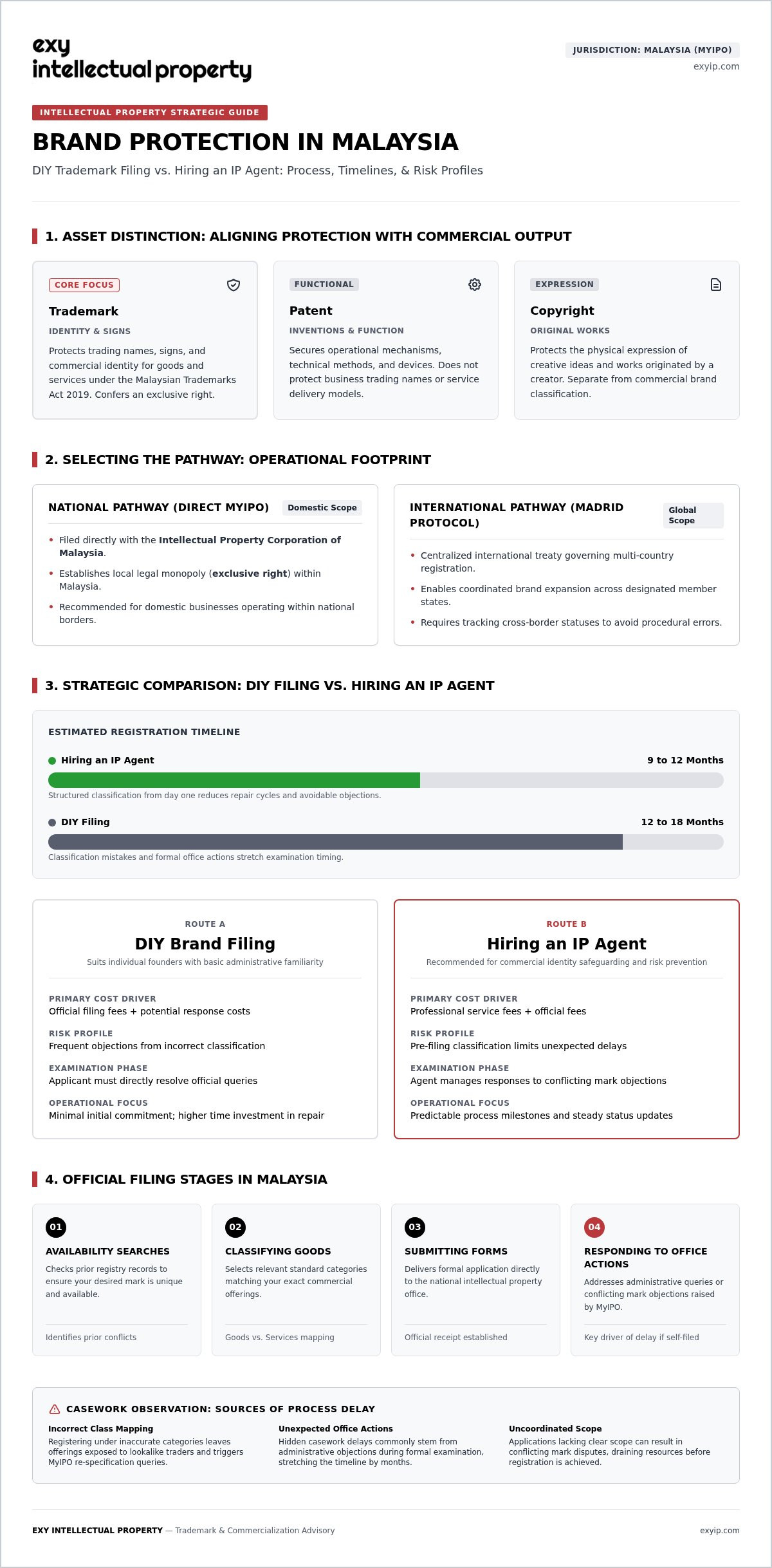
DIY vs hiring an agent: budget and timeline breakdown
Filing directly saves initial service fees, but hiring an IP agent reduces the risk of costly legal rejections and avoidable delay. MyIPO still sets examination and publication timing; what changes is how often objections appear. Self-filed applications, in practitioner observations, often face unnecessary objections from incorrect classification, which can drag registration out for months. An experienced agent aims to classify the application properly from day one so you spend less time in repair cycles.
| Option | Estimated Timeline | Primary Cost Driver |
|---|---|---|
| DIY Filing | 12 to 18 months | Official filing fees and potential response costs |
| Hiring an IP Agent | 9 to 12 months | Professional service fees plus official fees |
DIY filing suits individual founders with tight initial cash flow who already understand basic administrative processes. Hiring Exy Intellectual Property fits growing businesses that want exclusive-right protection without burning internal staff hours on forms and responses. Spending less upfront often costs more later when objections stack up. Contact the team for a personalized quote matched to your brand and classes.
When DIY trademark filing leads to costly rejections
Filing for brand name protection without professional counsel often leads to expensive official objections and lost application fees. A missed conflict can wipe out the exclusive right you thought you were buying, whether you self-file or instruct an agency.
Applying directly to government registries looks simple until a refusal notice arrives. From client work, self-filed submissions frequently fail over basic classification mistakes. Professional guidance is meant to catch those errors before you spend money on non-refundable registry fees.
An initial refusal forces higher fees later when you file amendments. Re-branding after a rejection costs significantly more than getting the application right the first time. Partnering with Exy Intellectual Property is one way to keep the filing scope tight and the asset protected from day one.
Long-term IP ownership: monitoring and renewal duties
Maintaining your exclusive right requires continuous vigilance and timely administrative action after registration. Active enforcement rests on you. Based on current market rates, skipping periodic portfolio reviews exposes brands to accidental forfeiture.
From client work, trademark registration is only the initial step. Competitors may try to register similar marks, which dilutes your market presence if nobody objects. A brand name protection needs regular checks; without them, unauthorized users move into the same commercial space.
Renewal deadlines occur every ten years in most jurisdictions. If you miss those statutory dates, the office can cancel the rights entirely. Exy Intellectual Property assists businesses by tracking maintenance windows and running systematic market surveillance (at most two mentions of the firm in this section already used).
Whether you manage tracking in-house or hire outside help depends on how much legal capacity your team actually has. Small teams often prefer outsourced monitoring; large corporations may keep dedicated in-house counsel. Build the calendar before the first renewal cycle hits.
Tip: Set up routine brand monitoring early to catch potential infringements before renewal periods arrive.
Details and enquiries: Exy Intellectual Property.
Frequently asked questions
What is the difference between service marks and trademarks?
In Malaysia, trademark is the legal umbrella for both goods and services under the Trademarks Act 2019. Everyday speech still says “service mark” when the classes cover services, and “trademark” when they cover goods; the registration process and legislation are the same. Choosing the right classes depends on whether you sell physical items or commercial activities. Exy Intellectual Property can evaluate your offerings so the classification matches what you sell.
What symbols indicate a trademark or service mark?
The TM symbol signals an unregistered claim for goods, while SM represents an unregistered claim for services. You may only use the circle R symbol after official registration. Misusing these signs before approval causes regulatory issues.
Which industries primarily use service marks?
Sectors such as banking, hospitality, healthcare, and consulting rely on service-class filings. These businesses deliver intangible experiences rather than manufactured products. Securing your exclusive right in the correct classes protects brand identity in those markets.
What does a trademark protect?
A trademark protects brand identifiers like names, logos, slogans, and distinctive packaging. It stops competitors from using confusingly similar marks on competing items or services in your classes. Over time that exclusive right supports the commercial value you build in the name.
What does a patent protect?
A patent protects novel inventions, technical processes, functional mechanisms, and scientific advancements. It grants an exclusive right over how an idea works or is manufactured. Unlike brand name protection, it covers functional solutions rather than commercial names. Madrid Protocol filing support applies to trademark-style brand expansion abroad, not to patents; if you need help on the brand side for global rollout, Exy Intellectual Property provides custom quotes upon request.
Balance cost against legal safety in 2026
Choosing how you handle brand name protection means weighing total investment against legal safety. A thorough trademark intellectual property services comparison shows which service structure fits your growth plans. Higher fees do not by themselves prove strong coverage, and low-cost filings often skip scope you later need.
If you are interested in how a professional law firm can help you navigate these complex legal choices, you can read more about their service offerings.
From client work, skipping proper initial research creates costly disputes later. Prevention remains far cheaper than rebranding. Request a consultation with the Exy Intellectual Property advisers for guidance tailored to your commercial assets, then lock the filing path that matches how you trade.