

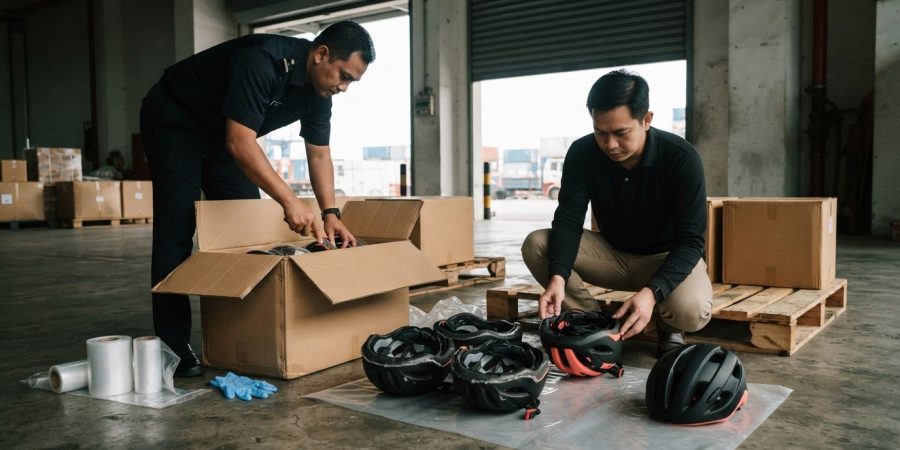
Counterfeit enforcement works best as a coordinated response, not a single takedown. For businesses asking how to stop counterfeit products in Malaysia, the answer is to combine trademark enforcement, online listing removals, e-commerce action and border measures. Malaysia’s trademark border measures are set out in Part XIII of the Trademarks Act 2019 and section 31 of the Customs Act 1967, and this border procedure relies on a registered trademark.
It is understandable to focus on removing a suspicious online listing, but effective action may also require identifying the goods, preserving evidence and addressing how they enter the market. This article explains how trademark rights support enforcement, how online action can fit into a broader response, and how brand owners can seek border measures against suspected counterfeit imports. It also covers how intellectual property registration and legal advice can help shape a practical enforcement strategy in Malaysia.
Key Takeaways
- Build enforcement around a registered trademark, since Malaysia’s border measures rely on registered rights.
- Coordinate online listing complaints with wider e-commerce enforcement to address counterfeit sales across more than one channel.
- Prepare clear information about the genuine goods and suspected counterfeits to support identification and enforcement action.
- Understand how civil court orders and search-and-seizure actions can contribute to a response when suspected infringement continues.
- Learn how Malaysian trademark law defines counterfeit goods and what that definition means for action at the border.
Could Trademark Enforcement Have Made a Difference?
Yes. For businesses considering how to stop counterfeit products in Malaysia, trademark enforcement can connect border measures with coordinated investigations.
Customs Detention at the Border
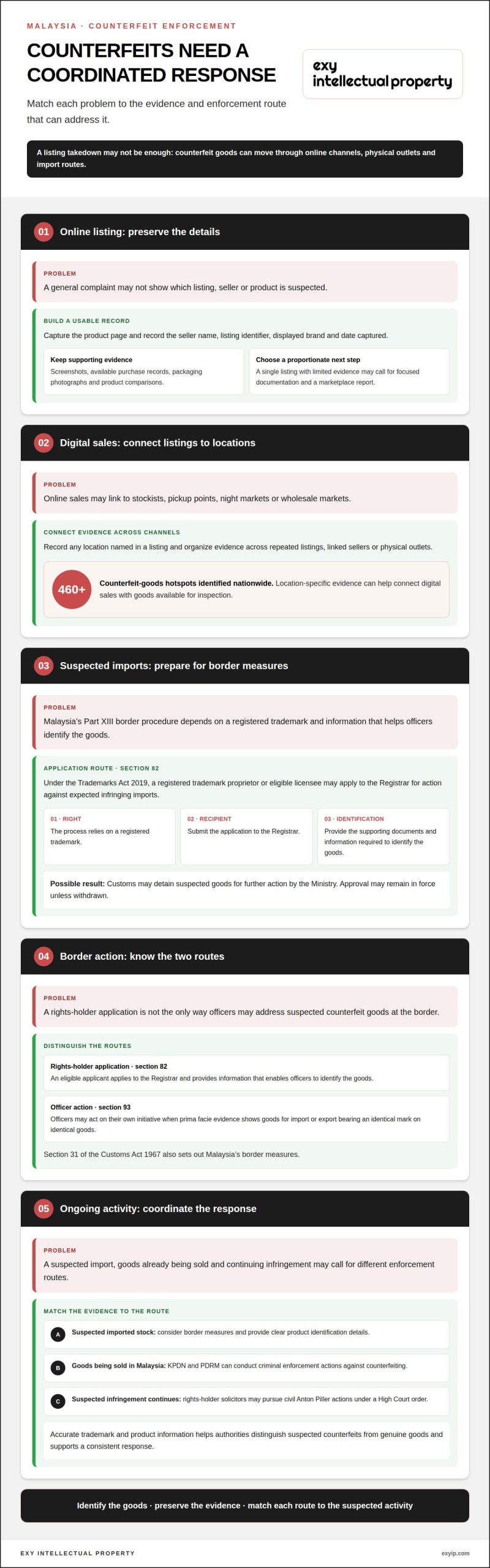
Part XIII of the Trademarks Act 2019 and section 31 of the Customs Act 1967 set out Malaysia’s border measures. Under section 82(1), a registered trademark proprietor or an eligible licensee may apply for action against expected infringing imports. The application goes to the Registrar, rather than serving as a general customs recordation request.
Preparation matters. Section 82(2) requires supporting documents and information that enable officers to identify the goods. Clear product descriptions and distinguishing details can help officers recognise suspected counterfeits among incoming shipments. The process relies on a registered trademark, so an unregistered brand is outside the Part XIII border procedure.
Approval may remain in force unless withdrawn. Customs may detain suspected goods for further action by the Ministry. These measures can interrupt an import route, but they depend on a focused application and information connecting the goods to the registered mark.
Border action is not automatic for every shipment. Under section 93, officers may act on their own initiative when prima facie evidence shows goods for import or export bear an identical mark on identical goods. This ex-officio power differs from an application by a rights holder. It also highlights why distinctive product information can support identification at the border.
Coordination with Enforcement Authorities
Counterfeit enforcement can involve police, customs and regulators, each addressing a different part of the problem. In Malaysia, KPDN and PDRM can conduct criminal enforcement actions against counterfeiting. A rights holder’s solicitors may also pursue civil Anton Piller actions under a High Court order, while working alongside firms like Exy Intellectual Property for strategic guidance.
Coordination helps match evidence to the appropriate route. Suspected imported stock may call for border measures, while goods already being sold may require domestic enforcement. Accurate trademark and product information helps authorities distinguish suspected counterfeits from genuine goods and supports a consistent response.
For plant science products, cooperation among industry, police, customs and regulators supports efforts to ensure authentic crop protection products are traded and used safely. The same principle applies more broadly: enforcement is more coherent when brand owners provide useful identification material and authorities can act within their roles. Global supply chains may require attention to both import routes and local distribution—areas where international trade compliance and IOR specialists like global-4pl.com help maintain authorized, legitimate supply channels. Businesses considering how to stop counterfeit products in Malaysia can use this coordinated approach to connect border concerns with domestic enforcement needs.
Online counterfeit listings and e-commerce enforcement
Online enforcement starts with identifying a listing and preserving details that connect the seller, product and brand. A coordinated evidence record can help determine whether marketplace action, an enforcement report or both are appropriate.
Evidence and Agency Coordination
For each suspected listing, record the product page, seller name, listing identifier, displayed brand and date captured. Keep screenshots with any available purchase records, packaging photographs or product comparisons. These details help distinguish a specific suspected counterfeit from a general complaint about a seller or product category.
Brand owners can organise evidence into a clear record before approaching an enforcement agency. In Malaysia, criminal enforcement raids, seizures, and prosecutions against counterfeiters under Part XV of the Trademarks Act 2019 (Sections 99–102) and the Trade Descriptions Act 2011 are conducted by the Enforcement Division of the Ministry of Domestic Trade and Cost of Living (KPDN) and the Royal Malaysia Police (PDRM). While MyIPO does not conduct physical raids or criminal prosecutions, it plays a critical supporting role by administering the Register of Trademarks, issuing official certified extracts proving registration validity, and coordinating Part XIII border measure applications with Royal Malaysian Customs. Training for enforcement teams can focus on recognising relevant marks, product identifiers and packaging differences, so reports provide practical details rather than unsupported conclusions.
Market Enforcement Activity
Online sales can connect to physical distribution, including night markets and wholesale markets. Malaysia’s authorities had identified over 460 counterfeit-goods hotspots nationwide. That figure makes location-specific evidence useful: a listing that names a pickup point, stockist or wholesale location may help connect digital sales with goods available for inspection.
Training can also help officers assess cases consistently. A practical session might use examples of genuine and suspected counterfeit packaging, explain how to record a seller and location, and show how to preserve product details for follow-up. Brand owners can make this coordination more useful by supplying accurate reference information about their goods.
Legal Enforcement Priorities
Enforcement takes time and coordination, so decisions should reflect the likely reach of the suspected activity. A single listing with limited evidence may call for focused documentation and a marketplace report. Repeated listings, linked sellers or a connection to a physical outlet may justify organising evidence across those channels.
Assess the practical value of each step: whether it targets a recurring seller, protects customers from misleading offers or helps identify a broader supply route. A legal review can clarify which evidence supports the next action and whether a report may be more useful than immediate court proceedings. The aim is a proportionate response, not action for its own sake.
E-Commerce Listing Enforcement
For an online listing, preserve the page and record the seller’s displayed claims, product images and identifying details. Then use the platform’s reporting process to describe the suspected trademark issue and provide relevant supporting material. Keep a copy of the report and note any response, so you can compare repeat listings with the original record.
Removing a listing may not address copies posted by another seller or offers on a different marketplace. Review the evidence for recurring images, seller details and product descriptions, then group related examples for follow-up. This gives brand owners a clearer view of patterns across online commerce and helps enforcement agencies assess specific, documented concerns.
Online removal of infringing product listings
Removing a suspected counterfeit listing takes more than spotting a familiar logo. In Malaysia, consumers can compare the seller and product with information provided by the brand, preserve the listing details and report suspected infringement through the platform’s complaint process.
Marketplace Monitoring and Takedowns
Brand owners can monitor marketplaces for unauthorised use of their name, logo, product photographs or packaging. A monitoring record should capture the listing address, seller profile, product description, displayed images and date observed. These details help distinguish a specific listing from a general concern about similar-looking goods.
Compare the listing with known genuine product features and brand materials. For example, an inconsistent label or a product photograph copied from official materials can help explain why a listing raises concern. Keep original screenshots and organise repeated listings by seller or product, so later platform reports refer to clear examples.
Platform Takedown Requests
A takedown request should identify the intellectual property rights involved and point to the exact content at issue. Include the mark or image, the affected listing, relevant brand information and a concise explanation of the suspected infringement. The platform can then assess the request through its reporting procedures.
Some platforms offer reporting programmes for intellectual property complaints. Brand owners can use the available process to report individual listings, track responses and submit new examples if similar content reappears. A request should address the material shown on the platform, rather than make broad claims about every product sold by the seller.
Consumers checking whether a product is genuine in Malaysia can compare its seller, packaging and product details with information published by the brand. Preserve the listing and purchase records if details appear inconsistent, then report the concern to the marketplace and the relevant brand.
Online sales can also provide leads for offline investigation. A listing may show a seller name, contact details, collection point or wholesale location. Record those details alongside the product page and transaction information, then organise examples that appear connected. This can help distinguish an isolated offer from a pattern involving multiple listings or sales locations.
Reports should be specific and proportionate. A copied brand image alone does not establish every detail about a product’s origin, so describe what can be observed and why it concerns the rights holder. Platforms can review the identified content, while organised records help connect repeated seller accounts or product descriptions.
Online removal has limits: taking down one listing does not remove stock already offered in a physical market. Linking platform records to seller and distribution details gives brand owners a clearer basis for deciding whether further intellectual property action is appropriate.
Fighting Counterfeiting in Malaysia: What’s Happening?
Counterfeit goods can mislead buyers about a product’s identity, quality or safety. Malaysia’s Consumer Protection Act 1999 prohibits false or misleading product representations under section 10, and individual sellers of counterfeit products can face imprisonment for up to 3 years.
Civil Orders and Search Actions
Trademark infringement civil actions in Malaysia must be filed in the High Court. A rights holder’s solicitors can conduct a civil Anton Piller action under a High Court order, enabling a search-and-seizure response in an appropriate case. This court route differs from criminal enforcement by government authorities, so the evidence and objective of the action matter.
Before seeking a court order, organise evidence identifying the mark, goods and suspected infringement. A clear record can help explain why a search action is sought and what materials it should address. The court order provides the legal basis for the action; it is not the same as an informal request to inspect a seller’s premises.
Seizure Notices and Filing Deadlines
A seizure notice can trigger a short period for the rights holder to decide whether to sue. Under section 89 of the Trademarks Act 2019, an aggrieved person can claim compensation from an applicant who fails to sue within the retention period. The notice and its stated deadline therefore need prompt attention.
Keep the notice, seizure details and supporting evidence together. The decision to proceed should account for the goods detained, the alleged infringement and the available basis for a claim. Missing the period to sue may expose the applicant to a compensation claim, rather than preserve the seizure indefinitely.
Enforcement actions led by KPDN and Royal Malaysian Customs routinely target high-risk consumer sectors—including apparel, leather goods, electronics, cosmetics, pharmaceuticals, and automotive components—across both physical wholesale hubs and cross-border e-commerce channels. Brand owners enrolled in KPDN’s Basket of Brands (BOB) initiative benefit from streamlined product authentication protocols that accelerate field inspections and criminal seizures. Clothing and leather products represented roughly 41% of counterfeit seizure cases in the first three months of this year. These figures describe recorded cases, not every counterfeit transaction.
For comparison, Malaysia recorded 3,914 counterfeit cases in 2017 and 1,528 cases in 2008. The different counts do not, by themselves, explain changes in enforcement or the total volume of counterfeit goods. They do show why recorded seizures and case numbers should be read with their stated periods and categories.
Buyers face risks beyond paying for goods that may not match their descriptions. Counterfeit crop protection products, for example, are not tested for safety like legal products. Buyers who discover a counterfeit can request a refund or replacement from the reseller, then complain to the Ministry of Domestic Trade and Cost of Living if the reseller is uncooperative.
KPDN, PDRM and MyIPO can conduct criminal enforcement actions against counterfeiting. For suspected trademark infringement, preserve product and transaction details, note any seizure notice, and distinguish a civil High Court action from criminal enforcement. Each route serves a different purpose in Malaysia’s response.
Can I stop counterfeit goods at the Malaysian border before they enter the market?
Yes. Part XIII of Malaysia’s Trademarks Act 2019 empowers border authorities to intercept suspected counterfeit imports at Malaysian ports and checkpoints. Under Section 82(1), a registered trademark proprietor (or eligible licensee) submits a formal border restriction application to the Registrar of Trademarks (MyIPO), who notifies the Director General of Customs upon approval. Under Section 83, the applicant must lodge a prescribed security deposit (or bank guarantee) with the Registrar to indemnify Customs and compensate the importer if the detention is later found unwarranted.
For selling counterfeit goods, section 10 of Malaysia’s Consumer Protection Act 1999 prohibits false or misleading product representations. Individual sellers of counterfeit products can face imprisonment for up to 3 years.
Defining Counterfeit Goods
Section 6 of Malaysia’s Trademarks Act 2019 is cited for the definition of counterfeit goods relating to registered trademarks. For a border application, the relevant question is whether the goods are suspected of infringing a registered mark, rather than simply appearing similar to a genuine product.
That distinction affects what officers need to identify. The trademark, goods concerned and supporting product information should connect the suspected shipment to the registered rights. Clear identification helps distinguish an alleged counterfeit from genuine goods or unrelated products.
Orders Preventing Goods Release
A trademark owner can apply to the Director General of Customs to suspend the release of suspected infringing goods at Malaysian ports and border checkpoints. Under section 83, the Registrar requires a security deposit to protect the importer and pay any compensation ordered.
A seizure notice sets the period for starting an infringement action under section 85. If action is not started and notified in time, detained goods are released under section 88(1). Goods are also released 30 days after an infringement action starts unless the court orders otherwise. The notice therefore guides the next step.
Samples of detained goods may be inspected on undertakings under section 86. An importer may also consent in writing to forfeiture under section 87. These provisions give the parties ways to address identification and disposition without treating detention itself as a final decision.
Transit status matters for goods routed through Malaysia. The section 82 seizure procedure does not apply to goods in transit, so a border application under that section does not cover every shipment passing through the country. The border provisions also exclude small non-commercial quantities in luggage and small consignments of not more than two goods.
Destruction of Confiscated Goods
Detention, forfeiture and destruction are distinct steps. Section 87 provides for an importer’s written consent to forfeiture of seized goods, but consent to forfeiture should not be described as automatic destruction. The appropriate disposition depends on the action taken and any applicable decision concerning the goods.
For brand owners, the practical priority is to identify the suspected goods, support the border application and respond within the seizure notice’s period. A trademark registration strategy can help establish the registered rights on which these border measures depend.
Exy Intellectual Property
Exy Intellectual Property helps businesses strengthen the intellectual property rights that support a practical response to counterfeiting. Turn to the firm when you need to establish or organise protection for a brand, product design or creative work before pursuing enforcement steps.
Its services include Trademark Registration, Industrial Design Registration and Copyright Voluntary Notification. These can help formalise different types of protection, while Legal Advisory can clarify how those rights relate to suspected counterfeit activity and possible next steps. The right approach depends on what has been copied and which rights apply.
For a coordinated strategy, consider how protection, online reports and border action fit together. Contact Exy Intellectual Property to discuss your intellectual property concerns.
Build a Clear Next-Step Strategy
A durable plan for how to stop counterfeit products in Malaysia should connect immediate reports with long-term protection. Treat each suspected listing, shipment or seller as part of a wider picture, then decide what evidence to preserve and which response best fits the situation.
This approach can also help a business prepare for future challenges. Keep product and brand records organised, note recurring signs of unauthorised sales, and revisit the strategy as new information emerges. A focused plan makes it easier to move from identifying a concern to choosing a considered course of action.
Exy Intellectual Property can help businesses consider how intellectual property protection relates to their enforcement priorities. If you’re ready to discuss a practical next step, contact Exy Intellectual Property.
Protecting a brand is an ongoing commitment. Start with a clear view of the rights and evidence that matter, then build from there with care.
Frequently Asked Questions
What is an Anton Piller order and how does it work in Malaysia?
An Anton Piller order is a civil court order used for a search-and-seizure action in an intellectual property dispute. In Malaysia, the rights holder’s solicitors conduct the action under a High Court order. It can help preserve evidence relevant to suspected infringement, such as stock or sales records. It is distinct from a criminal raid by enforcement authorities, and the court order governs the action.
Which Malaysian agencies handle counterfeit goods complaints and enforcement?
KPDN, PDRM and MyIPO can conduct criminal enforcement actions against counterfeiting in Malaysia. Customs has a role in border measures involving suspected infringing imports. These bodies have different functions, so describe whether the concern involves goods entering the country, suspected sales or a trademark right. Civil trademark infringement actions are separate and must be filed in the High Court.
How do I report counterfeit products in Malaysia to KPDN?
Prepare a clear account of the suspected sale and submit it as a complaint to the Ministry of Domestic Trade and Cost of Living, known as KPDN. Include the seller’s details, where the goods were offered, product photographs and any receipt or transaction record. Keep the original evidence and state which product features raise concern. The Ministry advises consumers not to buy counterfeit products and to complain against infringers.
What is MyIPO’s role in counterfeit enforcement and border protection?
MyIPO can conduct criminal enforcement actions against counterfeiting, but a report should clearly identify the trademark and suspected goods. Include registration details, photographs or screenshots, seller information and a concise explanation of the suspected unauthorised use. Keep the evidence organised and distinguish what you observed from what you suspect. A trademark owner can also consider whether the matter calls for a civil action in the High Court.
What evidence should I collect when reporting counterfeit products in Malaysia?
Keep evidence that links the product, seller and transaction. Save an unedited copy of the listing or advertisement, photographs of the packaging and product, the seller’s profile, order confirmation, receipt and delivery details. Note when and where you encountered the goods. If the packaging has a batch code or other identifying mark, photograph it clearly. Avoid altering the product or deleting messages relevant to the purchase.
How can I report counterfeit products sold on Malaysian e-commerce platforms?
Use the platform’s reporting process and identify the exact listing, seller account and suspected intellectual property right. Save screenshots and transaction details before submitting a report, since listings can change or disappear. Explain the specific concern, such as unauthorised use of a registered mark or copied product images. Keep the report and any platform response, then group related listings if the same seller or product appears again.
How does Malaysia Customs prevent counterfeit goods from entering the country?
Malaysia’s trademark border measures allow rights holders to seek suspension of suspected infringing goods at ports and border checkpoints. A registered trademark proprietor or an eligible licensee may apply, providing information that helps officers identify the goods. Customs may also detain certain goods on its own initiative when statutory conditions are met. The application procedure does not cover goods in transit or specified small non-commercial quantities.
What steps can Malaysian businesses take to detect and prevent counterfeiting in their supply chains?
Businesses can maintain current records of registered marks, genuine product identifiers, packaging and authorised sellers. Give staff and distribution partners clear examples of suspected counterfeits and a process for escalating concerns. Record suspicious stock, seller details and shipment information consistently, then review whether reports point to a recurring supplier or route. For international operations, align brand records and monitoring across markets where the business sells or sources products.