


A registered trademark is not a set-and-forget asset. If you’re asking what to do after your trademark is registered, start with practical steps: confirm what the registration covers, put consistent brand-use practices in place, and track future deadlines.
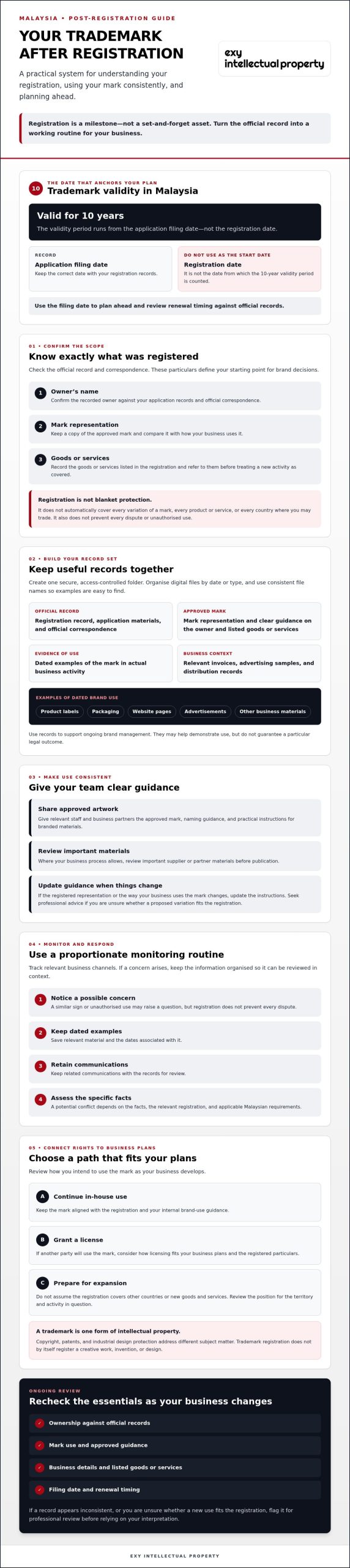
Registration is an important milestone, but it doesn’t automatically create a system for protecting your brand day to day. In Malaysia, a trademark is valid for 10 years from its application filing date, not its registration date. Record the correct date now to help plan ahead. Clear records of how the mark is used can also support ongoing brand management.
This checklist explains how to organise your registration documents, use and monitor your trademark consistently, and prepare for renewal. It also covers how licensing, commercial plans, and expansion into other markets may affect your next steps. With a workable process in place, you can connect trademark protection to the way your business operates and grows.
Key Takeaways
- Know what your registration covers, and understand that it doesn’t prevent every dispute or unauthorised use.
- For what to do after your trademark is registered, organise official documents and record the approved mark and goods or services.
- Set a proportionate routine to monitor relevant business channels, and keep dated examples and communications if a concern arises.
- Consider whether continued in-house use, granting a licence, or preparing for expansion best fits your business plans.
- Review ownership, use, business details, and renewal timing against official records as your brand and business change.
What trademark registration means, and what it does not do
A trademark is a sign that distinguishes a business or its products from others. Trademark registration formally recognises the sign for the registered owner and the goods or services recorded in the register. It is not blanket protection for every aspect of a business. This distinction is a useful starting point when deciding what to do after your trademark is registered.
Registration marks an important legal milestone, but it doesn’t guarantee that no one will challenge your rights or use a similar sign. A potential conflict depends on the facts, the relevant registration, and applicable Malaysian requirements. The general concept of trademark infringement can help explain why unauthorised use may raise concerns, but an online reference cannot determine the outcome of a specific dispute.
What information should you confirm on the registration record?
Compare the registration particulars with your application records and official correspondence. Check the owner’s name, the representation of the mark, and the goods or services listed. These details establish what was registered and give staff, business partners, and professional advisers a reliable reference.
Confirm the particulars against current official registry records and correspondence. If the owner information, mark representation, or listed goods or services appears inconsistent, flag the discrepancy for professional review before relying on your interpretation. Keep the relevant documents together so you can refer to the same record when making brand decisions, and consult professionals at Exy Intellectual Property if you need assistance verifying these details.
What does registration not automatically cover?
Don’t assume that a registration extends to every variation of a mark, every product or service your business may offer, or every country where you plan to trade. Its scope depends on the registration details, including the recorded owner, mark, and goods or services, as well as the territory in question. Review those particulars before treating a new brand use or business activity as covered.
Trademark rights are also distinct from other forms of intellectual property. A trademark concerns a sign that distinguishes a business or its products. Copyright, patents, and industrial design protection address different subject matter, so registering a trademark does not by itself register a creative work, invention, or design. Depending on what it creates and how it operates, a business may need to consider these rights separately.
Use the registration record as a defined starting point, not as a conclusion about every legal issue. If your business has changed, you plan to use a different version of the mark, or you’re unsure what the record covers, verify the position against current Malaysian requirements and the specific registration. Case-specific legal advice can help clarify questions before you make decisions about use, licensing, or expansion.
Your post-registration trademark checklist for records and brand use
Once you’ve checked the registration particulars, turn them into a working system. A clear set of records helps your team use the mark consistently and makes supporting documents easier to find when business or legal questions arise. This is a practical first step in deciding what to do after your trademark is registered.
Build a reliable record set
Create one secure, access-controlled folder for registration documents, official correspondence, and relevant business records. Keep a copy of the approved mark representation and a clear note of the owner and goods or services shown in the registration. Share relevant guidance with staff and business partners who prepare or approve branded materials.
Retain the registration record, application materials, official correspondence, approved artwork, dated examples of brand use, and relevant invoices, advertising samples, and distribution records. Organise digital files by date or type, and use consistent file names so examples are easy to locate later.
Document use and guide your team
Save dated examples showing how the trademark appears in actual business activity. Depending on how you trade, these might include product labels, packaging, website pages, advertisements, or other business materials. Invoices and distribution records may provide useful context. These records can help demonstrate use, but they don’t guarantee a particular legal outcome.
Consistency matters. Give relevant teams and partners the approved artwork, naming guidance, and practical instructions for using the mark. Where your business process allows, review important supplier or partner materials before publication. If the registered representation or the way your business uses the mark changes, update the guidance. Seek professional advice if you’re unsure whether a proposed variation fits the registration.
Set calendar reminders only after confirming applicable dates and requirements against current MyIPO records or official correspondence. Don’t rely on an unverified date copied from an old email. Check that each reminder relates to your Malaysian registration and the requirements that apply to it.
Review the folder when your brand or business changes, and make sure the people responsible for marketing and partner materials know where to find the current instructions. If you need help reviewing how the registration fits your business records and brand practices, trademark legal advisory may be useful.
How to Monitor Trademark Use and Respond to Conflicts
Monitoring doesn’t mean tracking every brand or marketplace. Build a proportionate routine around the channels where your customers, competitors, and business partners are most likely to encounter your mark. Depending on your business, that may include relevant online marketplaces, search results, social media, industry directories, and physical retail settings. Assign responsibility for reviewing these channels and keep the routine practical enough to maintain.
Look for uses that could affect your brand or confuse customers, not just names that appear similar. The legal standard of likelihood of confusion asks whether consumers may mistake one product or business for another. The assessment depends on context. Similar wording alone doesn’t establish infringement, and a difference in spelling doesn’t necessarily settle the question.
How can you assess a potentially similar mark?
Compare the signs, the goods or services involved, the audience, and the context in which each mark appears. For example, consider whether customers encounter both businesses in the same sales channel and whether the signs create a similar overall impression. These comparisons can help you frame the issue, but they don’t provide a definitive legal conclusion. Ask a qualified adviser to review the facts before sending a demand or making public allegations.
What should you do if you suspect unauthorised use?
Pause before responding. A measured process helps preserve useful information and avoid unnecessary escalation. For what to do after your trademark is registered, use this response framework:
- Document. Record where and when the use appeared. Save dated screenshots, photographs, product listings, advertisements, and relevant communications, keeping the original context where possible.
- Compare. Check the use against your registration particulars and consider the signs, goods or services, audience, and setting. Note what is similar and what differs.
- Assess business impact. Consider whether customers have raised questions, whether the use appears in your sales channels, and whether it may affect commercial relationships. Separate observed facts from assumptions.
- Seek qualified advice. Before contacting the other party, issuing a demand, or posting publicly, ask a Malaysian legal adviser to assess the specific facts, applicable requirements, and possible response options.
Consistent use by your own team and business partners supports clear brand management. If a suspected conflict could affect your brand or commercial relationships, seek case-specific legal advice before deciding how to respond. A measured review of the evidence and relevant Malaysian requirements can help you choose a considered next step.
Using a registered trademark in licensing and business growth
Registration gives you a basis for making business decisions about your brand, but the right approach depends on your plans. You might continue using the mark within your own business, allow another business to use it under a licence, or prepare for expansion into new markets. These are distinct choices, each calling for a review of ownership, intended use, brand oversight, and commercial objectives.
A licence is permission for another party to use a trademark under agreed terms. Before discussing one, clarify who owns the mark, what use is being considered, and how the arrangement fits your business goals. Scope, responsibilities, quality controls, and review arrangements are useful points to raise with an adviser. Their relevance depends on the proposed arrangement, so a generic checklist is not a substitute for reviewing the specific terms.
When might a trademark license fit your business?
A licence may be worth exploring if another business wants to use your mark for an agreed commercial purpose, such as offering products or services under your brand. Consider what each party expects, how the permitted use will be described, and how you’ll keep track of the arrangement as your business develops. For more background on registration strategy, read the Malaysia trademark registration strategic guide.
In-house use may suit a business that wants direct control of its brand presentation. Licensing may support a commercial relationship without transferring ownership. Expansion may involve entering new markets or developing a wider distribution plan. An adviser can help you consider how each option fits your ownership records, current use, and objectives. For tailored input, explore Exy Intellectual Property’s trademark and licensing support.
What should you review before entering new markets?
List your target countries separately. A Malaysian registration shouldn’t be assumed to protect the mark in other countries, and each market may require its own review of protection and filing routes. If you’re considering the Madrid Protocol, verify the current route and eligibility requirements before making plans. The global trademark registration strategic guide can help you frame that review.
These decisions give registration a defined role as a business asset. For what to do after your trademark is registered, match the next step to how you plan to use, licence, or grow the brand, and seek professional advice if the registration scope or proposed arrangement is unclear.
Plan trademark renewals and professional reviews before issues arise
Routine administration can help prevent missed dates, but it won’t answer every legal question. Keep calendar management separate from reviews about ownership, registration scope, business use, disputes, or changes to the registration. For Malaysian trademarks, the validity period is 10 years from the application filing date, and renewal can be made within the six months before expiry. Confirm the relevant dates and current requirements against official MyIPO records or with a qualified adviser before setting reminders.
How can you organise future trademark administration?
Assign a named person to maintain the trademark file and track verified dates. Keep official documents and adviser correspondence with the internal brand records, and make sure someone else can locate them if responsibilities change. A calendar entry is a prompt, not a substitute for checking the underlying record. Recheck dates and ownership details after a business restructure, transfer, or change in brand arrangements.
Review the file when the business or brand changes. Confirm that the recorded owner and business details remain accurate, that actual use still aligns with the registration, and that planned markets are considered separately. If a brand refresh or new product line raises questions about scope, treat it as a legal review rather than a simple calendar task.
When should you consult an intellectual property adviser?
Seek professional input if registration details appear inaccurate, your business use has materially changed, or you’re considering licensing or expansion. Advice can also help you assess a possible conflict before responding. These questions depend on the registration and circumstances, so general guidance should not replace a case-specific review.
Use the first week to set a sound process:
- Save the official registration documents and correspondence in the trademark file.
- Assign a responsible person to maintain the file and check verified dates.
- Record the renewal timing only after confirming it against current official information.
- Note any changes in ownership, business details, brand use, or planned markets for review.
That’s a practical start. If you want to discuss a registration question, licensing plan, or future market review, Discuss your trademark’s next steps with Exy IP.
Keep your trademark working for your business
Registration is a starting point for active brand management. Confirm what your record covers, keep official documents and dated examples of use together, and give staff clear guidance on presenting the mark. A proportionate monitoring routine and verified calendar reminders can help you stay organised.
So, what to do after your trademark is registered? Maintain consistent use, preserve relevant evidence if a concern arises, and review ownership, business details, and planned markets as your business changes. Registration doesn’t automatically cover every mark, product, or country, so check the specific scope before making decisions about licensing or expansion.
Commercial plans may call for more than routine administration. Exy Intellectual Property provides trademark registration and filing support, licensing agreements, commercialisation strategy, global trademark registration, and intellectual property legal advisory. Professional input can help connect your registration to your next business decision.
If you’re considering a licence, entering new markets, or need clarity on your registration, discuss your trademark’s next steps with Exy IP. With a clear process and the right advice, you can manage your trademark with greater confidence as your business grows.
Frequently Asked Questions
What should I do immediately after my trademark is registered?
Check the registration record, then save it with the application documents and official correspondence in a secure folder. Confirm the owner, mark representation, and listed goods or services, and share approved brand-use guidance with relevant staff and partners. Keep dated examples of the mark in business use, such as packaging or website pages. Add renewal reminders only after confirming the applicable dates and requirements against current MyIPO records.
Does trademark registration in Malaysia protect my brand in other countries?
No. A Malaysian trademark registration does not automatically protect your brand in other countries. Identify the markets where you plan to operate and check the protection and filing options for each. Malaysia is a member of the Madrid Protocol, but the available route and eligibility depend on current requirements and your circumstances. Confirm those details with official sources or a qualified adviser before relying on international protection.
How do I check what goods and services my trademark registration covers?
Review the goods and services recorded in your registration, then compare them with your application and official correspondence. Check the wording in the current MyIPO record rather than relying on a general description of your business or product range. If planned activities don’t appear to match the listed goods or services, seek professional advice before assuming they are covered. The specific registration and current Malaysian requirements guide the assessment.
Do I need to use my trademark exactly as it appears on the registration?
Use the registered representation as your reference for brand materials, and keep examples of how the mark appears in actual business use. A new design, added wording, or other variation may raise questions about whether it aligns with the registration. Don’t assume every change is covered or that every difference causes a problem. If your brand presentation has changed, compare it with the registration and seek advice if the scope is unclear.
Can I license my registered trademark to another business?
Yes, a trademark owner may license another business to use the mark, subject to applicable Malaysian requirements and the specific circumstances. In Malaysia, a trademark licence must be in writing and signed by the licensor to be effective. Before agreeing terms, consider the permitted use, responsibilities, oversight, and commercial purpose. Professional review can help ensure the arrangement reflects your ownership and business objectives.
What should I do if another business uses a similar trademark?
First, preserve dated evidence, such as screenshots, product listings, or relevant communications, and record where the use appeared. Compare the signs, related goods or services, audience, and context. Similarity alone doesn’t establish infringement; likelihood of confusion is assessed in context. Avoid public allegations or demands before reviewing the facts. If the issue may affect your brand or business relationships, seek qualified Malaysian legal advice about appropriate next steps.
When should I check my trademark renewal requirements?
Check the renewal date early and confirm current requirements using MyIPO records or a qualified adviser. In Malaysia, a trademark is valid for 10 years from its application filing date, and renewal can be made within the six months before expiry. Add a reminder only after verifying the date and process for your registration. Don’t rely on an old calendar entry or assume that another country’s renewal rules apply.