


Are you giving a business partner permission to use your brand, or a framework for operating a business under it? That distinction sits at the heart of trademark licensing vs franchising, and it affects the rights you grant, the control you retain, and the responsibilities each party takes on as your business grows.
You may want a partner to benefit from your brand without giving them more authority than the relationship requires. The key is to distinguish permission to use a trademark from permission to replicate a wider business model. Both arrangements can involve the same brand, but they create different expectations.
This guide explains the practical differences between licensing and franchising in Malaysia, including what each arrangement can cover and how its terms can support brand consistency. You’ll learn how to match the structure to your growth plans and intended relationship, and what to address before documenting and launching an arrangement. The aim is to help you make a considered decision with intellectual property protection in view.
Key Takeaways
- In trademark licensing vs franchising, the key distinction is whether you’re granting defined intellectual property use or creating a relationship around a replicable business model.
- Compare the rights, brand controls, operating expectations, support, and independence each arrangement would involve.
- Match the structure to your growth goal, then list the intellectual property involved and how the other party may use it.
- Clear agreement terms can protect brand consistency while setting practical boundaries for the relationship.
- Exy Intellectual Property’s licensing agreements, franchising consultancy, and commercialization strategy can help connect your chosen structure to your intellectual property plans.
Trademark licensing vs franchising: what does each arrangement mean?
A license grants defined permission to use intellectual property. In a business arrangement, that permission may cover a trademark, a sign that distinguishes a business or its products from others. Franchising generally goes further by combining brand use with a wider relationship for replicating a business model and its operating approach.
This distinction matters when planning growth. A business might allow another party to place its trademark on specified products without requiring that party to run its business in the same way. A franchise, by contrast, may be designed to reproduce a broader business operation. The label on a document does not settle the question by itself. The terms and the parties’ actual working relationship both matter when assessing the arrangement.
What does a trademark license allow?
A trademark license is permission from the trademark owner, the licensor, for another party, the licensee, to use the mark under agreed conditions. The licensee receives permission, not ownership. The owner retains the trademark, while the agreement sets the boundaries of authorised use.
Those boundaries can cover the goods or services involved, territory, duration, and quality controls. For example, a business might permit a partner to use its mark on a defined product line in an agreed territory, while setting standards for how the mark appears and how the products are presented. To make the permission clear, specify the mark, approved uses, relevant products or services, and any limits on channels or territory. Clear terms help both parties understand what is allowed and support consistent brand use.
What makes franchising a broader business relationship?
A franchise may include permission to use a trademark, but it can also involve the right to replicate a broader business model. That model may include operating methods, brand presentation, and ongoing support. The relationship is therefore often concerned with how the business is run, not only how its mark is used. Understanding Franchising provides a general overview of how franchising can bring these elements together.
For example, a partner authorised to use a brand on particular products may have a different relationship from an operator expected to follow a defined business format and receive continuing guidance. Neither support nor a particular level of control should be treated alone as a definitive legal test. Consider the full agreement and the parties’ actual conduct, and assess the intended structure in its Malaysian context.
In short, trademark licensing vs franchising is not just a choice of terminology. It is a decision about the rights granted, the operating relationship created, and how the parties will protect consistent use of the brand as the business expands.
Licensing vs Franchising: Rights, Control, and Operations
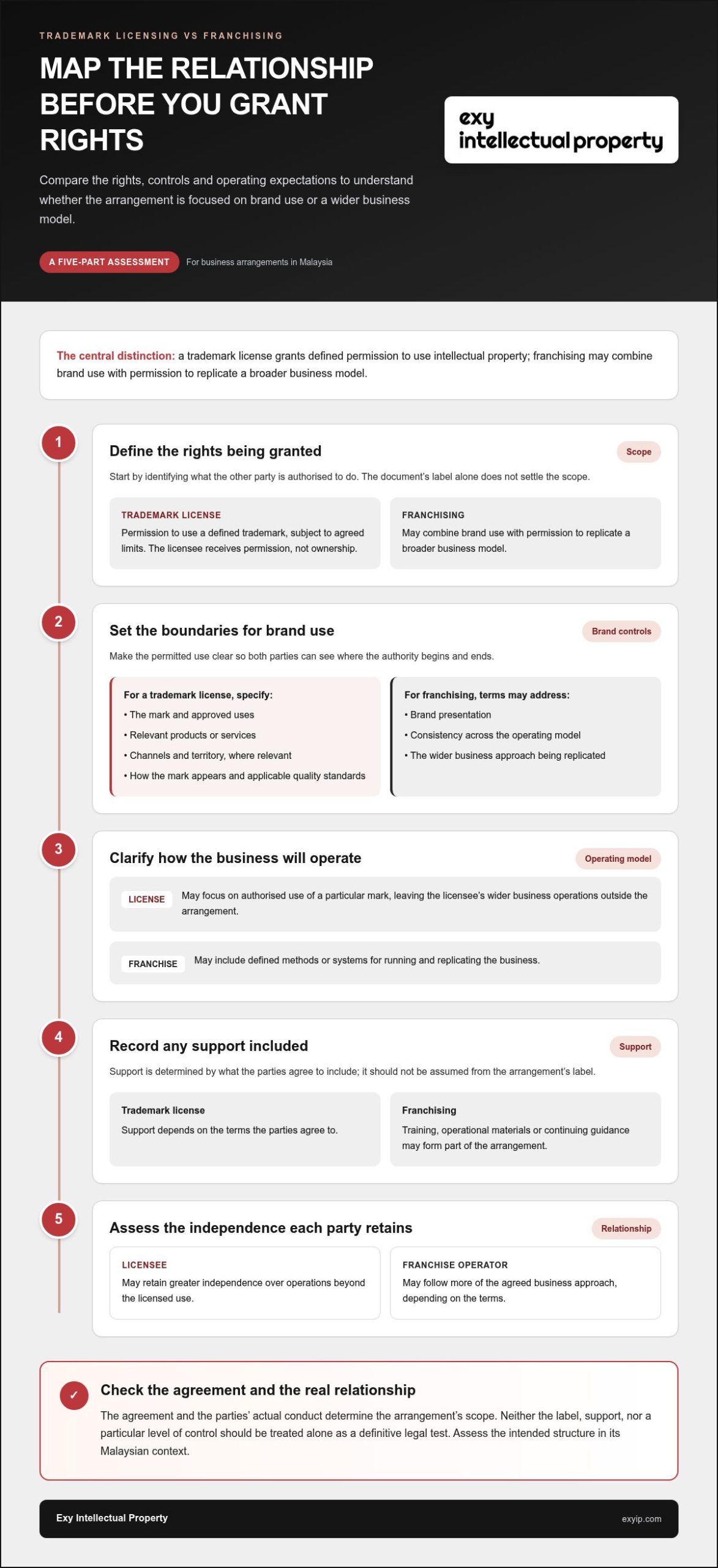
The practical difference is the scope of the relationship. A trademark license may focus on authorised use of a particular mark, while a franchise may cover a wider business model and how it is replicated. Neither label alone tells you exactly what rights or obligations apply. The agreement and the parties’ actual relationship determine the scope.
| Area | Trademark license | Franchising |
|---|---|---|
| Rights granted | Permission to use a defined trademark, subject to agreed limits. | May combine brand use with permission to replicate a broader business model. |
| Brand controls | Terms may set rules for the mark, products, channels, and territory. | Terms may address both brand presentation and consistency across the operating model. |
| Operating model | May leave the licensee’s wider business operations outside the arrangement. | May include defined methods or systems for running the business. |
| Support | Support depends on what the parties agree to include. | Training, operational materials, or continuing guidance may form part of the arrangement. |
| Independence | The licensee may retain greater independence over operations beyond the licensed use. | The operator may follow more of the agreed business approach, depending on the terms. |
Compare the rights and brand controls
A carefully scoped agreement can identify which marks are authorised, the products or services they relate to, the permitted sales channels, and the territory. It can also set expectations for how the mark is displayed and what quality standards apply. These are matters for the agreement, not universal conditions that apply to every license.
The owner retains rights outside the permission granted, but the precise boundaries depend on the agreed scope. For example, permission for one mark, product line, or territory does not automatically settle whether other uses are allowed. List the approved uses and any exclusions so both parties can see where the licensee’s authority begins and ends.
Compare operating involvement and commercial support
A limited brand-use permission may leave the licensee to decide how to run its wider business. A franchise relationship may go further by setting out how to replicate a business system. Training, operational materials, and ongoing support can be included, but their scope depends on the arrangement.
When comparing trademark licensing vs franchising, focus on what the parties will actually do, not only the headings in a document. Exy provides licensing agreements and franchising consultancy to help businesses define rights, controls, and operating expectations.
Which model fits your business goals, and what misconceptions should you avoid?
Choose the structure that matches what you want the other party to do. If your goal is to grant defined use of a trademark or other intellectual property, a license may fit. If you want another operator to reproduce a broader business model and operating approach, franchising may be more aligned.
Neither model is automatically better. A narrower arrangement may give the owner a focused way to set boundaries around brand use, while a wider model may support expansion through a more consistent business format. Both call for clear planning and agreement terms. Consider how much independence the other party should have, which standards matter to the brand, and what ongoing involvement you intend to provide.
When might a trademark license suit your plans?
Imagine a business allowing a partner to use its trademark on a specified range of goods. The owner can define the permitted products, channels, territory, and presentation of the mark, while leaving the partner to run its wider business independently. This may suit a plan focused on commercializing a particular asset without replicating the owner’s full operating model.
The benefit is a defined scope: both parties can understand what use is permitted and where the owner’s control applies. The trade-off is that a license focused on brand use may not provide the operational consistency of a broader system. Set terms around the owner’s actual priorities rather than assuming every detail of the partner’s business can or should be controlled.
When might franchising better match an expansion plan?
Consider an established business that wants another operator to reproduce its business format, including agreed ways of serving customers and presenting the brand. If the owner plans to provide training, operating systems, materials, or continuing guidance, those elements may form part of the wider relationship. Describe their scope in the agreement rather than leaving either party to make assumptions.
This approach can support consistency across separate operations, but it also requires coordination. The owner may need to define how the model is followed, how updates are communicated, and how brand standards are maintained as the arrangement develops. Make sure the expected involvement is realistic for the business and clear to the operator.
A common misconception is that calling an arrangement a “license” settles its classification. It doesn’t. The substance of the terms and how the parties act matter, so a document’s title alone may not reflect the relationship. For a Malaysian business, assess the proposed arrangement in its legal context before signing. Exy provides licensing and franchising advice to help connect the choice to your intellectual property and growth plans.
What should Malaysian businesses assess before choosing either structure?
Make the decision in sequence. Start with the growth goal, identify the rights involved, and then describe the working relationship you expect. This helps keep the proposed structure aligned with the commercial plan instead of letting a contract label drive the decision.
- Define the growth goal. Decide whether you’re granting a partner defined use of intellectual property or asking an operator to follow a broader business format.
- Map the rights. Identify the intellectual property involved and how the owner expects it to be used.
- Describe the relationship. Set out each party’s responsibilities, decision-making role, and expected level of support.
This sequence gives you a practical basis for comparing trademark licensing vs franchising. It can also reveal gaps, such as expecting consistent brand presentation without deciding who reviews it or how concerns are raised.
Map the rights, responsibilities, and boundaries
List each trademark and any related intellectual property the arrangement is meant to cover. Then specify the permitted uses, relevant products or services, channels, territory, duration, and any agreed exclusivity. Clear boundaries distinguish what the other party may do from uses the owner has not authorised.
Plan how the parties will manage brand standards in practice. The agreement can address quality review, reporting, approval processes for changes, and how suspected unauthorised use will be raised and handled. Make responsibilities workable for both sides. Also consider what happens when the relationship ends, including how each party will handle continued use of the intellectual property and any business materials.
Review the agreement and applicable Malaysian requirements
Have the proposed relationship and its written terms reviewed before launch. The review should consider the arrangement as a whole, including the rights granted, operating expectations, and how the parties intend to work together. Calling an arrangement a license does not, by itself, establish how it should be treated.
For a franchise-related structure, review the current Malaysian requirements that apply to the specific arrangement before relying on assumptions about registration, documents, or other obligations. The relevant requirements depend on the proposed structure. For related expansion guidance, read the franchise consultancy guide for Malaysia.
Exy advises on the structure and documents the intellectual property relationship. Discuss your licensing or franchising plans with Exy as part of developing an IP strategy that supports your business direction.
How can Exy help you turn the right model into a workable IP strategy?
Choosing between a license and a franchise is only part of the planning. The arrangement also needs to fit the intellectual property you own, the way you intend to commercialize it, and the role you expect a business partner to take. Exy provides licensing agreements, franchising consultancy, and commercialization strategy, bringing the commercial structure into consideration alongside your IP priorities.
Bring the business model and IP rights together
A focused review starts with what the business plans to bring to market. That may include a trademark, related intellectual property, or a broader operating approach. The intended use helps shape the permissions and responsibilities that belong in the agreement. For example, terms can define how a partner may use a mark, what brand controls apply, and which responsibilities sit with each party.
Clear agreement terms can support consistent brand use as a business expands. They also connect the owner’s rights with the partner’s role, reducing the risk of different expectations about permitted use or operational involvement. Exy’s advisory work can bring these elements into a wider IP strategy to support planned growth while protecting brand value.
Trademark protection is part of that foundation. If you’re assessing how to protect a brand in Malaysia, read the Malaysia trademark registration guide for further guidance on registration and brand protection.
Prepare for a focused advisory discussion
A little preparation can make an advisory discussion more productive. Set out your expansion goal and describe what you expect the proposed partner to do. Is the aim to permit defined use of intellectual property, or to replicate a wider business model? Note the areas where you want to retain control and the support you expect to provide.
It can also help to gather existing trademark details and any draft commercial terms. These materials give a clearer picture of the rights being considered, the proposed scope, and points that may need refinement. Exy advises on licensing agreements, franchising options, and how the structure fits your intellectual property strategy.
Discuss your licensing or franchising strategy with Exy to consider a structure that reflects your business plans and IP interests.
Choose a structure that supports your next stage of growth
The right choice in trademark licensing vs franchising depends on the relationship you intend to create. A license can define permission to use particular intellectual property, while franchising may suit plans to reproduce a wider business model. In either case, clear terms should set out the rights, responsibilities, and brand controls that support consistent use as your business expands.
Look beyond the agreement’s title. Consider your growth goal, the intellectual property involved, the partner’s role, and the level of operational support you expect to provide. These decisions help align the commercial arrangement with your broader IP strategy.
Exy advises on licensing agreements and franchising consultancy, and provides trademark registration and intellectual property commercialization services. This joined-up perspective can help you assess the structure, document permissions, and plan how your brand and other intellectual property support growth.
Discuss your licensing or franchising strategy with Exy and take a considered next step towards expanding your business.
Frequently Asked Questions
Is trademark licensing the same as franchising?
No. Trademark licensing grants permission to use a mark under defined terms, while franchising may combine brand use with a broader business model and operating approach. The distinction depends on the rights granted and the relationship the parties create. A document’s title alone doesn’t settle the issue. When comparing trademark licensing vs franchising, consider the agreement’s substance and how the parties will work together in practice.
Can I license my trademark without franchising my business?
Yes. You can grant a partner permission to use your trademark for a defined purpose without asking them to replicate your wider business model. For example, an agreement could permit use of a mark on specified goods while leaving the partner to manage its other business operations. Set out the permitted use and any brand standards clearly, and consider whether the actual relationship matches the intended limited scope.
What is the main difference between a license and a franchise agreement?
A license generally grants specific permission to use intellectual property, such as a trademark. A franchise agreement can cover a wider relationship, including rights to use a brand and replicate a business model or operating approach. It may also address guidance or support. The exact scope depends on the terms and the parties’ conduct, so review what each side is expected to do rather than relying on the document’s name.
Does a franchise include a trademark license?
A franchise commonly includes permission to use the franchisor’s brand, which may be set out in the franchise agreement or related terms. The agreement may also cover elements beyond trademark use, such as the business format and operating expectations. Don’t assume every franchise arrangement grants identical rights. Review which marks may be used, for what purposes, and under what controls, alongside the wider responsibilities the parties have agreed.
Which is better for expanding a business, licensing or franchising?
Neither is better for every business. Licensing may suit a plan focused on granting defined use of a trademark or other intellectual property. Franchising may fit an expansion plan where another operator is expected to reproduce a broader business model. Consider your growth goal, desired level of operational involvement, and capacity to support brand consistency. The right structure is the one that fits the intended relationship and can be clearly documented.
Can a licensing agreement include quality control?
Yes. A licensing agreement can set quality standards and explain how the trademark may be presented or used. It might also describe review or approval processes, reporting, and how the parties will address concerns about brand use. These controls should match the permission granted and be practical for both sides. Clear terms help the owner protect consistent use of the mark without leaving expectations open to interpretation.
What should I review before signing a trademark license or franchise agreement?
Review the intellectual property covered, permitted uses, territory, duration, exclusivity, quality controls, responsibilities, support, reporting, changes, and what happens when the relationship ends. Check that the written terms reflect how the parties plan to operate, not just the label on the document. For a franchise-related arrangement in Malaysia, have the specific structure and applicable requirements reviewed before signing. This helps surface unclear boundaries and obligations early.