

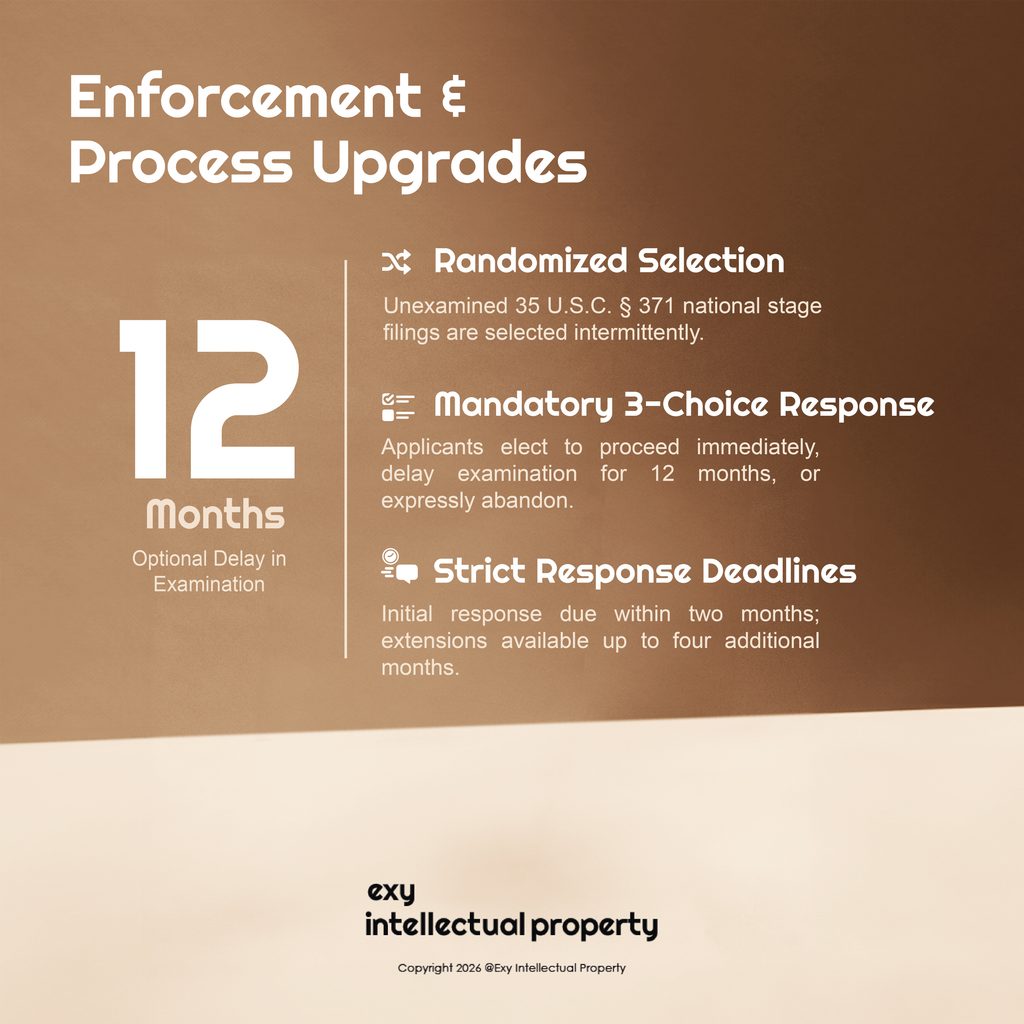
The United States Patent and Trademark Office (USPTO) has officially launched the PCT Information Exchange Request (PIER) pilot program. Designed as a one-year trial initiative, the pilot introduces flexible prosecution options—including an optional, cost-free 12-month delay in examination—for randomly selected Patent Cooperation Treaty (PCT) national phase applications entering the US.
Key Highlights & Strategic Impact
The PIER pilot offers international applicants valuable procedural flexibility during the critical transition from international PCT stage to US national phase entry:
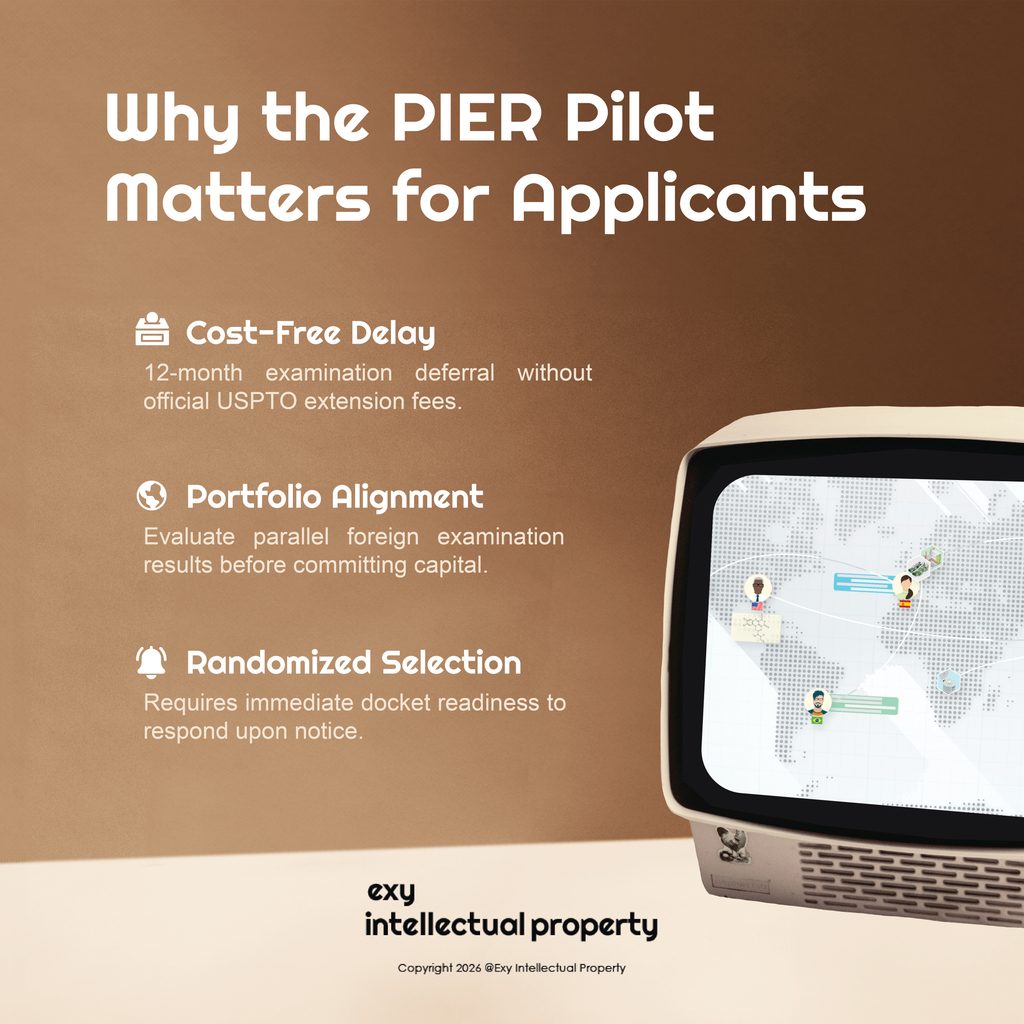
- 1. Cost-Free Prosecution Deferral: Selected applicants can elect a 12-month deferral of formal substantive examination without incurring standard USPTO extension fees or administrative penalties.
- 2. Strategic Portfolio Alignment: Provides applicants with crucial time to evaluate parallel search and examination outcomes from other foreign patent offices (such as the EPO, JPO, or CNIPA) before committing significant capital to US office action responses.
- 3. Commercial Viability Assessment: Allows businesses to align US prosecution milestones with product development timelines, funding rounds, or early commercialization data.
- 4. Randomized Selection & Prompt Action: Because participation is determined via randomized selection upon national phase entry, applicants and their US patent counsel must monitor incoming USPTO notices closely.
Recommended Best Practices for Managing PIER Applications
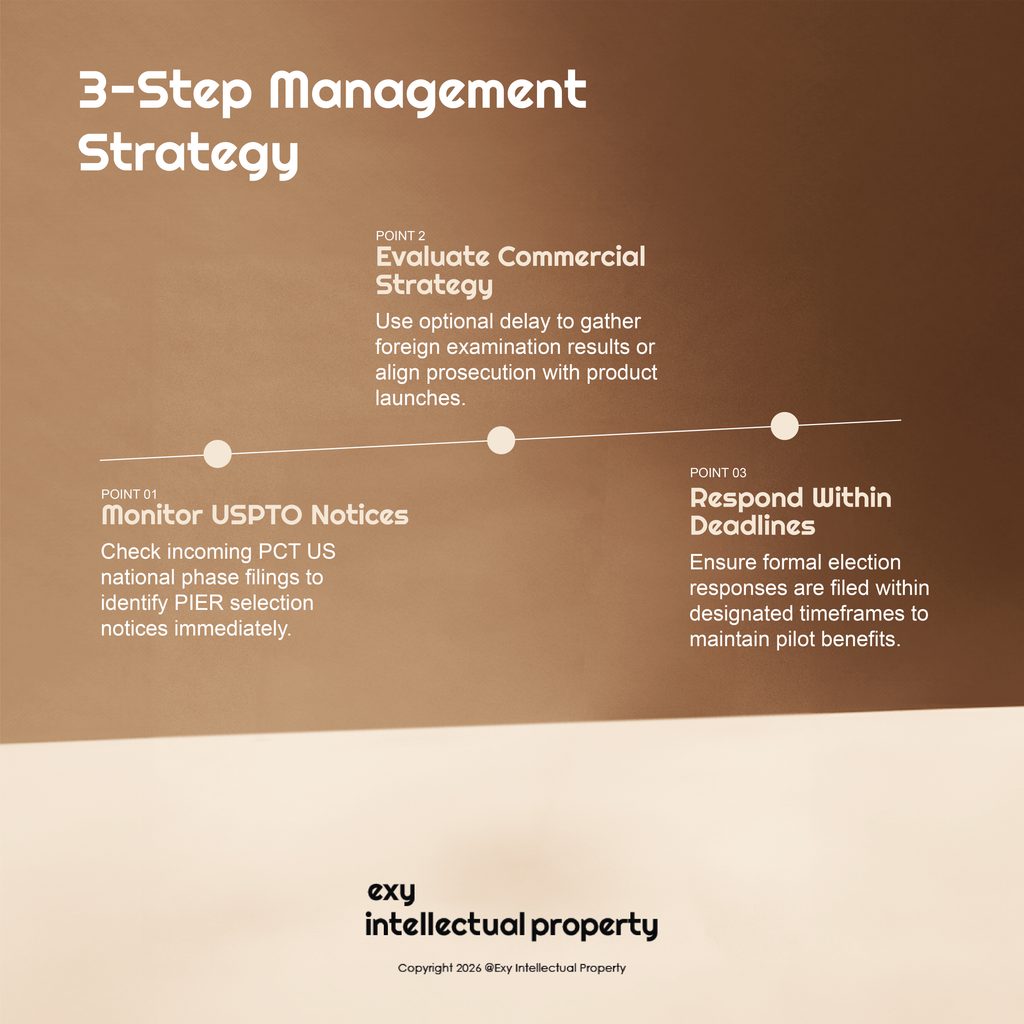
To maximize the strategic benefits of applications selected for the PIER pilot:
Adhere Strictly to Response Deadlines: Ensure formal election responses and deferral requests are filed within the USPTO’s designated timeframes to secure pilot benefits and avoid inadvertent abandonment.
Monitor USPTO Incoming Notices Promptly: Instruct your US patent docketing teams to review all initial electronic correspondence on newly filed PCT national phase applications to immediately identify PIER selection notices.
Coordinate Global Prosecution Timelines: Utilize the optional 12-month delay to gather international search reports or counterpart examination results, streamlining your global patent strategy.