


What if another business uses a name close to yours, but you’re not sure whether it poses a real threat? If you’re asking what to do if someone is using my business name, start by comparing the facts rather than confronting the other party. Similarity alone doesn’t establish that customers are being misled or that you have grounds to demand a change.
It’s understandable to feel protective of a name you’ve invested in. Assess how closely the names compare, whether you operate in similar markets, and whether customers could mistake one business for the other. In Malaysia, business-name registration and trademark registration serve different purposes. Registering a business name doesn’t, by itself, resolve every question about trademark rights.
This article explains how to assess the risk, preserve useful evidence, and choose a measured response. You’ll also learn when specialist Malaysian trademark advice can help clarify your position, including options such as trademark registration or IP enforcement support.
Key Takeaways
- To decide what to do if someone is using my business name, compare the names, branding, products or services, audiences, and channels where each name appears.
- A registered business name and a trademark are different. Review your registration status and how you’ve used the name.
- Before responding, save dated screenshots, URLs, advertisements, packaging, and relevant correspondence.
- Choose a proportionate next step, from monitoring the situation to seeking specialist advice before making contact or considering formal options.
- Reviewing the name, evidence, and business context together can clarify practical options for protecting your brand in Malaysia.
Someone Is Using Your Business Name: First Assess the Situation
Discovering another business with a similar name can be unsettling, especially if customers might associate its products or services with yours. But a shared name doesn’t, by itself, establish infringement or show that the other business is targeting you. Start by examining how each business presents and uses the name, and whether the overlap could affect customers in practice.
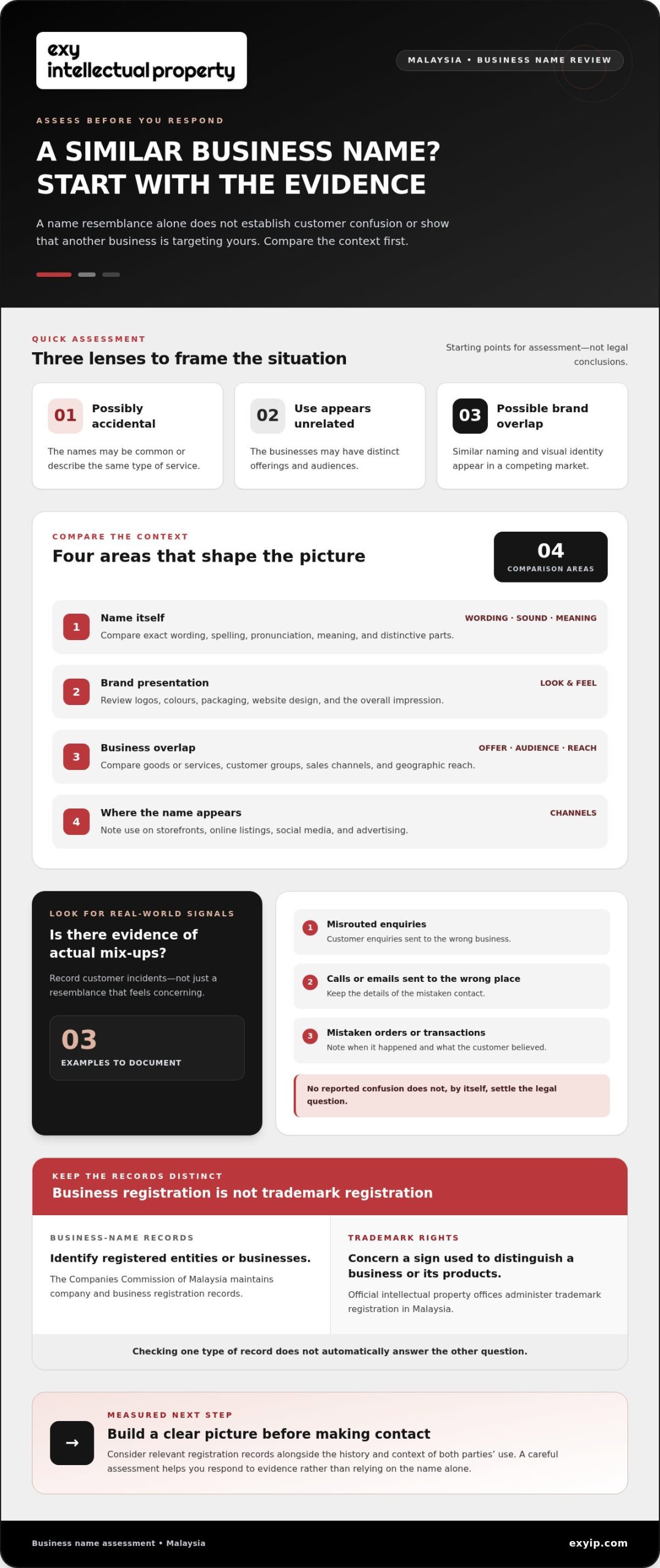
Separate three possible situations. The similarity may be accidental, particularly if the names are common or describe the same type of service. The use may be unrelated, with distinct offerings and audiences. Or the other business may appear to be drawing on recognition your brand has built, for example by adopting a similar name and visual identity in a competing market. These are useful starting points for assessment, not legal conclusions.
If you’re deciding what to do if someone is using my business name, build a clear picture before contacting the other party. Compare:
- The exact wording, spelling, pronunciation, meaning, and distinctive parts of each name.
- Logos, colours, packaging, website design, and the overall impression each brand creates.
- The goods or services offered, customer groups, sales channels, and geographic reach.
- Where and how the name appears, such as storefronts, online listings, social media, or advertising.
Market overlap helps frame the practical concern. Two similar names used for unrelated services and different customer groups may present a different situation from similar branding used to sell competing products to the same audience. Malaysian legal conclusions depend on current law and the specific facts, including how each name is used and what rights may apply.
Does the other business create a real risk of confusion?
Look for evidence of actual mix-ups, not only a resemblance that concerns you. Keep a record of customer enquiries sent to the wrong business, misdirected emails or calls, and mistaken orders or transactions. Note when each incident occurred and what the customer believed. These details can help show whether the similarity affects business interactions. The absence of reported confusion doesn’t, by itself, settle the legal question.
Is it a business-name issue or a trademark issue?
Company or business-name records identify registered entities or businesses. Trademark rights concern a sign used to distinguish a business or its products. Official intellectual property offices administer trademark registration in Malaysia, while the Companies Commission of Malaysia maintains company and business registration records. Checking one type of record doesn’t automatically answer the other question. For background, see this Malaysia trademark registration guide.
That distinction matters when assessing your position. A name appearing in a business record doesn’t, on its own, establish the scope of trademark rights. Nor does a similar name automatically mean another business has violated yours. Consider relevant registrations alongside the history and context of both parties’ use. A careful assessment helps you respond to the evidence rather than relying on the name alone.
What Rights May Protect a Business Name in Malaysia?
For a name conflict, the relevant question is what protection applies to the sign and the way it’s being used. A trademark registration identifies a particular sign and the goods or services covered by it. The scope matters: protection for a name in relation to one category doesn’t automatically mean every use of a similar name in another category is covered.
In Malaysia, the legal position can depend on registration status, the sign, earlier use, and the surrounding facts. The US Trade Administration’s Protecting Intellectual Property in Malaysia guide offers broader context on the country’s intellectual property framework. Registration records are one part of assessing a conflict, not a guarantee that a particular response will succeed.
What does trademark registration change?
Registration can provide an exclusive right to use the registered trademark for the goods or services within its scope, subject to applicable law and the facts. Check the details rather than relying on the business name alone: the registered sign, the covered goods or services, and the status of the record may all matter when comparing it with another party’s use.
If your business also operates or plans to expand beyond Malaysia, consider protection in each relevant market. A Malaysian registration doesn’t establish rights worldwide. A global trademark registration strategy can help you plan for those markets.
Statutory Rights & Infringement (Section 54, Trademarks Act 2019)
Under Section 54 of the Trademarks Act 2019, a registered trademark owner holds exclusive rights to use the mark and can initiate formal infringement actions against unauthorized third parties using identical or confusingly similar signs in relation to registered goods or services. Registration creates a statutory presump
What if the name is not registered as a trademark?
Lack of registration doesn’t automatically mean there are no possible rights, but it doesn’t guarantee a claim either. Prior use, reputation, records showing how customers recognise the name, and the other party’s conduct may be relevant. Whether those facts support a legal claim depends on the circumstances and Malaysian law.
Before asserting a right or sending a formal demand, seek specialist Malaysian advice. Exy Intellectual Property’s trademark legal advisory can assess the name, available records, and evidence together, then discuss proportionate options without promising a particular outcome.
Protecting Unregistered Names via Common Law Passing Off
If your business name is not registered at MyIPO, you can still defend your brand under the common law tort of Passing Off. To establish a passing off claim, you must prove three legal elements: established local market goodwill in Malaysia, deceptive misrepresentation by the competitor causing public confusion, and actual or prospective commercial damage to your business reputation.
How to Document the Name Use Before You Respond
Good records can help distinguish a genuine customer or brand risk from a similarity that only looks concerning at first. Before contacting the other business or making a public allegation, preserve what you can see and keep the material in context. If you’re working out what to do if someone is using my business name, a clear evidence file gives you and any adviser a more reliable basis for deciding what comes next.
Which evidence can help assess a business-name conflict?
Follow a simple sequence: save the original material where possible, then note when and where you found it. Keep your own brand records in a separate folder so the two businesses’ materials don’t become mixed.
- Capture the full context. Take dated screenshots that show the full webpage or social media profile, including the account name, address bar or URL, relevant text, and surrounding branding. A cropped image of the name alone may leave out details that explain how it’s being used.
- Save examples of commercial use. Keep copies of advertisements, product listings, menus, service descriptions, packaging, signs, and other materials displaying the name. Note the goods or services shown and the channel where customers encountered them.
- Preserve customer mix-ups. Save relevant emails, messages, or enquiry records that show a customer mistook one business for the other. Keep the original wording and dates. Don’t edit a message to make the confusion sound stronger.
- Retain source details. Record the URL, platform, date and time collected, and a short note about what the item shows. Keep original files unchanged and store a working copy separately if you need to highlight or annotate something.
Online content can change or disappear, so a dated copy and its source details help preserve what you observed. Keep relevant correspondence about the name use, too, including any replies you receive. A screenshot shows what appeared at a particular time, not necessarily why the other business chose the name.
How can you protect the business while reviewing the issue?
Keep your own records current and accurate. Save dated examples of your name in use, such as advertising, sales materials, invoices, packaging, and records of how the brand developed. These can help establish the timeline and context of your use. Don’t alter old documents or create records that imply a date or event that didn’t happen.
Then prepare a brief chronology. List when you first used the name, when you noticed the other use, where you found it, and any customer confusion or communications that followed. Separate what you directly observed from what you infer. For example, “the businesses advertise similar services on the same platform” is an observation. “They are trying to trade on our reputation” is an assumption unless you have evidence to support it.
Keep public communications factual while you review the material. Avoid accusing the other business of wrongdoing online before the evidence and legal position have been assessed. An organised file won’t decide the dispute, but it can help a specialist adviser assess the facts and discuss proportionate next steps.
What Should You Do Next? Choose a Proportionate Response
Once you’ve gathered the facts, choose a response that fits the level of risk. A similar name used in a separate market may call for a different approach from competing businesses facing repeated customer mix-ups. If you’re deciding what to do if someone is using my business name, don’t treat a formal demand or public complaint as the automatic next step. The appropriate route depends on the evidence, the rights involved, the business impact, and current Malaysian law.
A measured response ladder can help you move forward without escalating unnecessarily:
- Monitor. If the use appears unrelated and you haven’t identified customer confusion, keep a dated record of new examples and changes in the other business’s activity.
- Seek advice. If the businesses overlap or the evidence raises concerns, get an IP-focused review before taking a position. This can help clarify what your records do and don’t establish.
- Consider measured contact. If clarification may resolve the issue, consider a brief, factual enquiry. Plan the wording carefully and keep a copy of any correspondence.
- Assess formal options. If the concern remains, review possible next steps with an adviser. A formal letter, complaint, or court action isn’t automatic. Whether an option is suitable depends on the circumstances and applicable law.
Should you contact the other business directly?
Direct contact may clarify whether the similar name is a coincidence or help address practical customer confusion. Keep any message calm and specific: identify the use you observed and ask for clarification without claiming more than your evidence supports. Avoid threats, admissions, or unsupported statements that the other party has infringed your rights. If the matter appears serious, or a response could affect a developing dispute, seek legal review before making contact.
When should you consider formal IP advice?
Consider specialist advice if customer confusion continues, both businesses operate in overlapping markets, or the other party’s branding appears to imitate yours. An adviser can review relevant trademark records alongside your evidence and business context, then discuss risks and proportionate options under Malaysian law. This assessment can help you make an informed decision without assuming that a particular legal route or outcome is available.
Exy Intellectual Property provides Malaysian legal advisory and IP litigation services focused on intellectual property matters. Its review can bring together the name, records, and evidence before you decide whether to escalate the dispute. Learn more about specialist Malaysian IP advice.
How Exy Intellectual Property Can Help Protect Your Business Name
A name conflict can involve more than a close spelling. Your registration position, how you’ve used the name, the other business’s activities, and any evidence of customer confusion may all affect what steps make sense. Exy Intellectual Property provides trademark registration, legal advisory, and intellectual property litigation services in Malaysia, helping businesses assess name concerns in context without assuming that a particular action or outcome is guaranteed.
A specialist review connects the legal position to the commercial reality. The same name may raise different questions when used for unrelated services than when used for competing products in the same sales channels. Looking at these factors together can help you understand the strengths and limits of your position before deciding whether to seek registration advice, communicate with the other business, or consider further action.
What can a specialist review cover?
The review can consider the name and relevant trademark records alongside the goods or services your business offers. It can also examine your evidence of the other party’s use, including where the name appears and whether customers have mistaken one business for the other. The aim is to assess the facts and discuss proportionate legal advisory or IP litigation options, not to predict a result.
This joined-up assessment matters because a registration record alone may not explain the full business context, while customer reports or screenshots alone may not establish the legal position. A specialist can help identify which evidence is most relevant, what further information may be useful, and whether the concern calls for monitoring, advice, or a more formal response under Malaysian law.
How can you prepare for an initial discussion?
Organise the key material so the issue can be understood efficiently. You don’t need to prepare a legal argument. A concise factual summary is a useful starting point, especially if it separates what you observed from what you suspect.
- Write down the business name and any relevant trademark application or registration details.
- Prepare a short chronology of your use of the name, when you noticed the other use, and what happened next.
- Group dated screenshots, URLs, advertisements, packaging examples, and relevant correspondence together.
- Include customer reports of mistaken enquiries or transactions, keeping the original messages where possible.
- Add examples showing how your own business uses the name, such as dated advertising or sales materials.
These records can help an adviser compare the name, its use, the available rights, and the potential business impact. If you’re still considering what to do if someone is using my business name, a focused discussion can help clarify which next steps suit your circumstances.
For tailored Malaysian trademark and IP support, review your business-name concern with Exy Intellectual Property. A careful review can help you make decisions with a clearer view of the evidence and available options.
Make Your Business Name Part of Your Growth Plan
A business name is more than an identifier. It carries the recognition and trust your team builds over time. Treating it as a long-term business asset can help you make deliberate decisions as your products, services, and customer reach evolve.
If you’re still weighing what to do if someone is using my business name, focus on your next practical step rather than trying to resolve every uncertainty at once. Organise the information you have, identify the questions that remain, and consider how the name fits into your wider brand plans. A measured approach can help protect commercial relationships while avoiding unnecessary escalation.
Exy Intellectual Property can help you consider the business-name issue in the context of your intellectual property strategy. Its trademark registration and advisory services can help you assess the name and available options in Malaysia.
Your brand deserves thoughtful protection. Gather your records and discuss your business-name concern with Exy Intellectual Property to consider a practical next step.
Frequently Asked Questions
Can someone use my business name if I have registered it with the Companies Commission of Malaysia?
Possibly. Registering a business or company name with the Companies Commission of Malaysia doesn’t automatically give you an exclusive right to stop every other use of that name. The effect depends on the relevant records, how the name is used, and any trademark rights or other legal considerations. If another business uses a similar name, assess its activities and customer impact rather than relying on the registration record alone.
Does registering a business name give me trademark rights in Malaysia?
No. Business-name registration and trademark rights are separate matters. A business-name record identifies a registered business or company, while a trademark protects a sign used to distinguish goods or services, subject to the relevant legal scope. For example, registering a company name doesn’t automatically establish protection for every logo or product name the company uses. Review trademark records separately to understand which signs and goods or services are covered.
What should I do first if another company is using my business name?
Start by identifying the exact use and its likely business impact. Note where you encountered the name, what the other company offers, and whether there’s a practical connection to your customers or sales. If you’re asking what to do if someone is using my business name, resist sending an angry message or posting an accusation before checking the facts. A calm initial review helps you choose a response that fits the situation.
Can I take action if I have not registered my business name as a trademark?
Possibly, but an unregistered name doesn’t guarantee a claim or a particular remedy. The business’s prior use and reputation, the other party’s conduct, and any resulting harm may matter. For instance, records showing that customers associate a name with your business could be relevant to an assessment. Get advice on the evidence and applicable Malaysian law before asserting a legal right or demanding that another business stop using its name.
How can I show that another business is using a name similar to mine?
Keep dated records that show the name in context, such as online listings, advertisements, product pages, or photographs of packaging. Record the source and the date you viewed each item, since online content can change. If a customer contacts you about a mix-up, preserve the original message and note what happened. Avoid editing material to strengthen your case. A clear record of what you observed is more useful.
Can two Malaysian businesses use the same or similar name?
It depends on the names, relevant business or company records, trademark rights, and how each business operates. Similar names may raise different concerns when businesses offer unrelated services than when they compete for the same customers. Approval or entry in one register doesn’t, by itself, resolve every question about another business’s use. Consider the full context before concluding that the names can or cannot coexist.
Should I contact the other business before speaking to an IP adviser?
Not necessarily. A neutral enquiry may clarify a simple misunderstanding, but contact can also affect a developing dispute or prompt a response you need to assess carefully. If the other business is a direct competitor, customers have reported repeated confusion, or you’re considering a formal demand, get IP advice before writing. If you do contact them, keep the message factual and avoid threats or statements about rights you haven’t established.
Can I register my business name as a trademark after someone else starts using it?
You may be able to apply, but an application doesn’t guarantee registration or settle the dispute with the other business. The assessment may depend on the proposed trademark, relevant goods or services, existing records, and the parties’ use of the name. Earlier use by another party may be relevant, so review the facts and registration position before relying on an application as a solution. Specialist Malaysian trademark advice can help clarify the issues.