


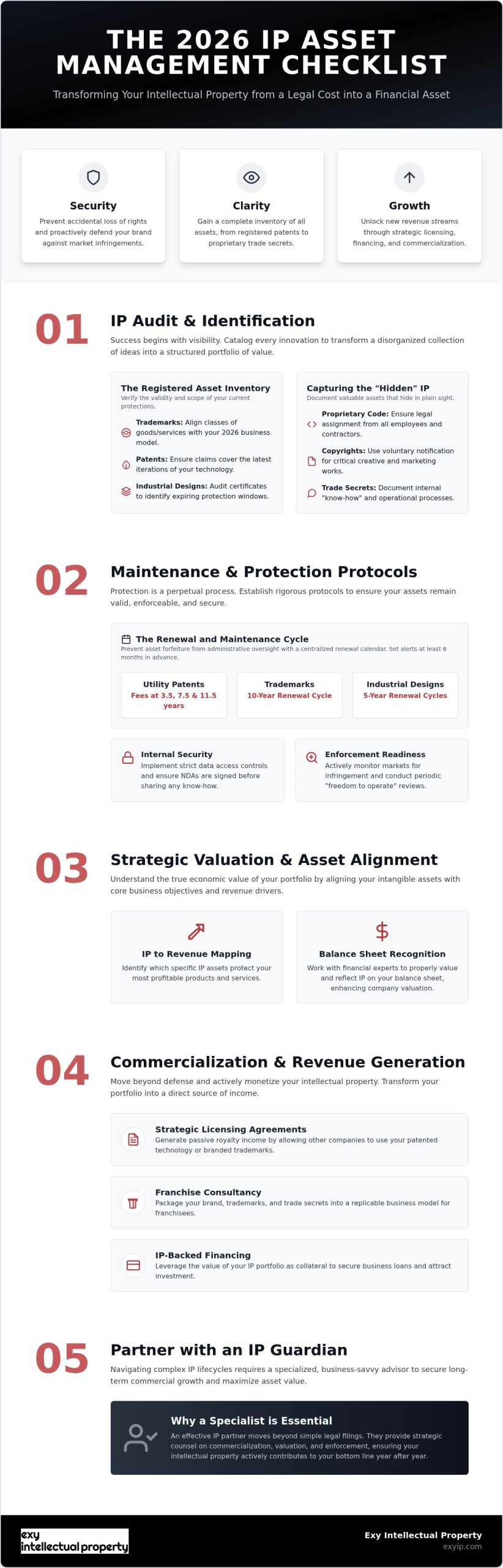
Your intellectual property is not a static legal filing. It’s a living, breathing financial asset that should be working for your bottom line every single day. Many leadership teams view their patents and trademarks as mere insurance policies; they pay the maintenance fees and hope the protection holds. This passive approach to intellectual property asset management is a missed opportunity for growth. It often leads to the anxiety of missed renewal deadlines or the frustration of owning a portfolio with an unknown market value.
Security. Clarity. Growth. You deserve a strategy that offers these three pillars. We understand the pressure of keeping your innovations protected while trying to scale in a competitive global market. This guide provides a comprehensive 2026 checklist designed to move your IP from the filing cabinet to the balance sheet. You’ll learn how to build a clear inventory of your assets, strengthen your enforceable rights, and create a practical roadmap for IP-backed financing or licensing. It’s time to stop just defending your ideas and start commercializing them.
Key Takeaways
- Learn how to catalog your entire portfolio, from registered patents to proprietary trade secrets, ensuring every innovation is accounted for and protected.
- Establish robust monitoring and renewal protocols to prevent the accidental loss of rights and proactively defend your brand against market infringements.
- Discover how professional intellectual property asset management aligns your intangible holdings with core revenue drivers to reflect their true economic value on your balance sheet.
- Unlock new revenue streams by transforming your IP into passive royalty income through strategic licensing agreements and franchise consultancy.
- Understand why a specialized, business-savvy advisor is essential for navigating complex IP lifecycles and securing long-term commercial growth.
Step 1: The Intellectual Property Audit & Identification
Success begins with visibility. You can’t leverage what you haven’t identified. A comprehensive audit serves as the bedrock of effective intellectual property asset management, transforming a disorganized collection of ideas into a structured portfolio of value. This process requires a meticulous look at both what is filed and what remains hidden within your daily operations. It’s the first step in moving from a reactive legal posture to a proactive commercial strategy.
The Registered Asset Inventory
Start with the obvious. Your registered assets represent the defensive perimeter of your business. This involves more than just checking a spreadsheet; it’s a deep dive into the validity and scope of your current protections. Every trademark registration number must be verified against the specific jurisdictions where you currently trade or plan to expand. Since global patent filings grew by 4.9% in 2024 according to WIPO data, staying updated on your patent novelty search reports is essential to maintain technical relevance in a crowded market.
- Trademarks: Confirm that your classes of goods and services still align with your 2026 business model.
- Patents: Review drafting documents to ensure they cover the latest iterations of your technology.
- Industrial Designs: Audit your certificates to identify expiring protection windows before they lapse into the public domain.
Capturing the "Hidden" IP
Valuable assets often hide in plain sight. Unregistered IP, such as proprietary software code, marketing collateral, and internal "know-how," frequently carries significant weight during an intellectual property valuation. If these aren’t documented, they aren’t protected. We recommend a systematic approach to identifying these intangible holdings to ensure they’re ready for future commercialization.
Review your employee and contractor agreements immediately. Ensure every line of code or design element created by an external partner is legally assigned to your company. Without a clear chain of ownership, your licensing efforts could face a sudden legal halt. Use copyright voluntary notification for your most critical creative works. This provides a public record of your rights, making enforcement much simpler if a dispute arises. Finally, map your current registrations against your target export markets. Protection in Malaysia doesn’t automatically grant you rights globally. A geographic gap analysis ensures you aren’t walking into a new territory unprotected and vulnerable to brand squatters.
Step 2: Maintenance and Protection Protocols
Protection is a perpetual process. Once you’ve identified your assets, the focus shifts to ensuring they remain valid and enforceable. Neglecting a single renewal deadline can result in the irrevocable loss of a competitive advantage. A rigorous approach to Intellectual Property Asset Management is non-negotiable for any enterprise looking to secure its long-term market position. It’s about moving from acquisition to active preservation.
The Renewal and Maintenance Cycle
Asset forfeiture often happens quietly through administrative oversight. To prevent this, you must establish a centralized renewal calendar that tracks every jurisdiction in your portfolio. For utility patents, maintenance fees are typically due at specific intervals; for example, in the U.S. system, these occur at 3.5 years, 7.5 years, and 11.5 years. Missing these windows can lead to heavy surcharges or the total expiration of your rights. Trademarks generally require a 10-year renewal, while industrial designs often operate on 5-year cycles. Automated alerts should be set at least six months in advance to allow for budget allocation and strategic review.
Internal security is the second layer of this cycle. Implement strict access controls for proprietary data and ensure that Non-Disclosure Agreements (NDAs) are signed before any technical "know-how" is shared with third parties. We also recommend periodic "freedom to operate" reviews. These reviews ensure that as you develop new product lines, you aren’t inadvertently infringing on the rights of others, which could lead to costly intellectual property asset management failures later on.
Enforcement and Litigation Readiness
A right that isn’t defended eventually loses its value. Monitoring the market for potential infringements or "brand squatting" is essential for maintaining the strength of your trademarks. You don’t need a massive budget to start; setting up Google Alerts for your brand keywords and common variations is a practical first step. If you detect unauthorized use, having a standardized "cease and desist" protocol allows you to act quickly and decisively. This demonstrates to the market that you’re a proactive guardian of your innovations.
Mitigating Post-Grant Opposition Risks
Maintenance protocols must account for post-grant validity challenges. Under Sections 55A and 56A of Malaysia’s Patents (Amendment) Act 2022, third parties have a strict six-month window post-grant publication in the IP Official Journal (IPOJ) to file administrative oppositions directly with MyIPO. Ensuring that patent claims include multi-layered dependent fallback positions during drafting ensures assets survive post-grant competitor attacks.
Finally, audit your existing licensing agreements. Ensure your licensees are complying with quality standards and reporting royalties accurately. If you find your portfolio is becoming difficult to track, our legal advisory services can provide the structured oversight needed to keep your assets secure. By treating enforcement as a routine business function rather than an emergency response, you build a reputation for reliability and strength.
Step 3: Strategic Valuation and Asset Alignment
Value is the bridge between legal protection and commercial reality. If you don’t know what an asset is worth, you can’t make informed decisions about how much to spend protecting it. This is where intellectual property asset management evolves from a cost center into a financial discipline. Aligning your portfolio with core business revenue drivers ensures you aren’t wasting resources on "vanity" patents that don’t contribute to the bottom line. By determining the economic value of your portfolio for the balance sheet, you transform intangible ideas into recognized corporate wealth.
Why Management Requires Valuation
Strategic management requires measurement. Understanding the intellectual property valuation methodology used by experts allows you to identify which assets are truly "performing" and which are merely draining capital. This clarity is essential for deciding which rights to maintain and which should be sold or abandoned to streamline your operations. For businesses looking to scale, using trademark valuation for business serves as a powerful tool to attract high-level franchising partners. These partners need to see the tangible worth of your brand identity before committing to a long-term relationship.
Compliance with International Valuation Standards (IVS 210)
For an IP valuation report to be accepted by institutional lenders, Big 4 auditors, or cross-border tax authorities during an audit, it must adhere to IVS 210 (Intangible Assets). Adherence to IVS 210 ensures that risk-adjusted discount rates (WACC plus technological obsolescence factors) and Tax Amortization Benefits (TAB) satisfy institutional due diligence requirements.
Valuation for Tech and Startups
For technology-driven firms and startups, valuation is the primary language of growth. Leveraging patent valuation services during M&A due diligence can significantly increase your leverage at the negotiating table. Similarly, how ip valuation for tech startups is presented directly impacts venture capital interest and the eventual terms of your funding. The Income Approach is a primary method for tech asset assessment; it defines the value of an asset by calculating the present worth of the future economic benefits it’s expected to generate. Integrating this valuation data into your overall corporate strategy prepares your leadership team for IP-backed financing or high-stakes investment rounds. It’s about ensuring your innovations are ready for the scrutiny of the financial market.
Step 4: Commercialization and Revenue Generation
Protection and valuation provide the foundation, but commercialization delivers the reward. This stage is where your intangible assets generate tangible cash flow. Effective intellectual property asset management treats your portfolio as a product in its own right. It’s about finding the most efficient path to market, whether through your own production lines or by empowering others to use your innovations for a fee. You’ve spent years building your reputation; now it’s time to let that reputation work for you.
Licensing and Franchising Readiness
Passive income starts with a robust legal framework. Before you can scale, you need a clear franchise consultancy Malaysia checklist to ensure your business model is replicable and legally sound. Drafting robust licensing agreements is critical. These documents must protect your core brand while allowing partners the flexibility to operate. You don’t want to lose control of your quality standards in exchange for a quick royalty check. Your royalty structures shouldn’t be based on guesswork. Use your previous IP valuation reports to define fair, market-aligned rates that incentivize growth without devaluing your work. A well-structured agreement creates a win-win scenario where your partners succeed and your asset’s value increases.
IP Commercialization Strategy
Growth requires looking for "white space" opportunities. These are market gaps where your existing technology or brand can solve new problems. Often, this involves using patent filing services Malaysia to secure technical improvements before you enter a new market segment. This proactive approach prevents competitors from blocking your expansion. It’s much easier to defend a market position you’ve already staked out with a fresh filing.
You should also explore IP financing options. Unlocking liquidity through IP-collateralized loans allows you to fund expansion without selling off valuable company equity. This is a sophisticated way to leverage your balance sheet. Collaborative R&D through joint venture agreements can also accelerate your timeline by sharing the risks and costs of innovation. By partnering with others, you can combine your IP with their market reach or technical expertise. If you’re ready to turn your legal filings into revenue, our team can help you build a custom commercialization strategy that fits your specific business goals.
Step 5: Partnering with a Business-Savvy IP Guardian
General legal counsel is essential for daily operations, but they often lack the specialized lens required for high-stakes intellectual property asset management. Most firms treat IP as an administrative task; they file the paperwork and file away the certificates. This reactive approach misses the strategic nuances that turn a patent from a piece of paper into a revenue-generating tool. A specialized IP firm acts as a proactive advisor, looking beyond the legal text to find the commercial heartbeat of your innovation.
Transitioning from protection to growth requires a fundamental shift in mindset. You need a partner who understands the technical complexities of patent drafting and the financial intricacies of valuation. Specialized guardians don’t just wait for you to ask for help. They actively monitor your portfolio for expansion opportunities and risk factors. They bridge the gap between the courtroom and the boardroom, ensuring your legal strategy supports your long-term business objectives.
For businesses looking to expand beyond their home market into the UAE, Expert Plus Businessmen Services provides the specialized business setup advisory needed to create a strong legal foundation for your regional operations.
The Exy IP Management Advantage
We position ourselves as more than just a service provider; we’re your commercial partner. Our approach to intellectual property asset management provides end-to-end support that covers the entire lifecycle of your assets. From the initial patent novelty search to the final commercialization strategy, we ensure every step adds value. You gain access to a deep pool of expertise in IP litigation and specialized valuation, which are critical for navigating the 2026 business landscape.
- Global Reach: We help growing brands secure trademarks and patents nationally and internationally, providing a consistent shield across multiple jurisdictions.
- Commercial Insight: Our team integrates franchising consultancy and licensing agreements directly into your management plan to maximize royalty income.
- Security: We handle the tactical maintenance so your leadership team can focus on innovation and market expansion.
Getting Started with Your IP Audit
The first step toward a high-value portfolio is clarity. Scheduling a consultation allows us to review your current holdings and identify immediate risks, such as upcoming renewal deadlines or ownership gaps. We also look for low-hanging revenue opportunities that your current management strategy might be overlooking. Whether you’re a tech founder preparing for a funding round or an established business looking to franchise, a structured audit is the most effective way to start your journey toward proactive asset growth. It’s time to Secure your assets with Exy IP today and transform your intellectual property into your most valuable commercial advantage.
Securing Your Commercial Future Through Strategic IP Oversight
Your intellectual property is more than a legal formality. It’s the engine of your company’s future growth and market authority. By implementing a structured approach to intellectual property asset management, you transform hidden innovations into visible, high-value assets. You’ve learned how to audit your portfolio, maintain rigorous protection protocols, and align your assets with real-world revenue drivers. These steps ensure that your ideas aren’t just safe; they’re profitable.
Since our founding in 2021, Exy IP has focused on delivering commercial outcomes for businesses ready to scale. We provide comprehensive support for your trademark, patent, and franchise strategy. Our experts specialize in IP valuation and financing, helping you unlock liquidity and attract high-level investment. You don’t have to manage this complex lifecycle alone.
Request a Strategic IP Management Consultation to begin your transition from reactive protection to proactive asset growth. Your innovations represent your hardest work. We’re here to ensure they receive the sophisticated guardianship they deserve. Success is within reach when your strategy is as bold as your ideas.
Frequently Asked Questions
What is intellectual property asset management?
Intellectual property asset management is the strategic process of identifying, protecting, and extracting commercial value from your intangible holdings. It moves beyond simple administrative filing to align your patents and trademarks with your long-term revenue goals. This approach ensures every innovation contributes to your balance sheet. By treating IP as a financial asset rather than a legal cost, you create a sustainable path for expansion and market dominance.
How often should a business conduct an IP audit?
You should conduct a comprehensive IP audit at least once every twelve months to maintain portfolio health. Significant business changes, such as a merger, acquisition, or the launch of a new product line, also require an immediate review. Regular audits help you identify "hidden" assets like trade secrets and ensure your geographic coverage matches your current export strategy. This proactive habit prevents the accidental forfeiture of rights due to missed deadlines.
Can I manage my own IP portfolio without a professional agent?
You can manage your own portfolio, but the administrative burden and legal risks are substantial. Professional agents provide the technical expertise needed for complex patent drafting and global trademark searches. They act as your specialized advisor, handling the tactical monitoring and renewal cycles. This partnership allows your leadership team to focus on core growth while ensuring your professional interests remain in safe, capable hands.
What happens if I miss a trademark renewal deadline in Malaysia?
Missing a trademark renewal deadline in Malaysia typically triggers a six-month grace period, though you’ll face additional surcharges. If you fail to renew within this window, the mark is removed from the register. While you can apply for restoration, the process is expensive and leaves your brand vulnerable to competitors. Consistent management ensures these critical windows are never missed, protecting your brand’s market position and enforceability.
Is IP valuation necessary for small businesses or just large corporations?
Valuation is essential for businesses of all sizes, particularly for startups seeking venture capital or IP-backed financing. It provides a concrete dollar value for your innovations, which is critical during investment rounds or M&A due diligence. For small businesses, it serves as a powerful tool to attract franchising partners. Large corporations use these reports to reflect the true economic worth of their intangible assets on the corporate balance sheet.
How does IP management improve my chances of getting business financing?
Lenders view professional intellectual property asset management as a sign of a mature, low-risk business. A well-managed portfolio includes up-to-date valuation reports that can be used to secure IP-collateralized loans. This unlocks liquidity without the need to sell off company equity. By proving that your innovations are legally protected and commercially viable, you significantly increase your leverage when negotiating with financial institutions or private investors.
What is the difference between IP registration and IP management?
Registration is the initial legal act of filing your trademark or patent to secure ownership. Intellectual property asset management is the ongoing strategic lifecycle that follows, focusing on maintenance, enforcement, and commercialization. Registration gives you the right to exclude others, while management ensures you’re actually profiting from that right. Effective management turns a static legal certificate into a dynamic commercial asset that drives your business’s long-term health.
Can I license my trademark if it is only registered in Malaysia?
You can license your trademark if it’s registered in Malaysia, but the protection only applies within national borders. If you intend to license your brand to partners in other countries, you must secure registrations in those specific jurisdictions first. Attempting to license unregistered marks internationally is risky and often leads to unenforceable agreements. Global registration ensures your brand remains protected as you scale your business model through franchising or licensing.