

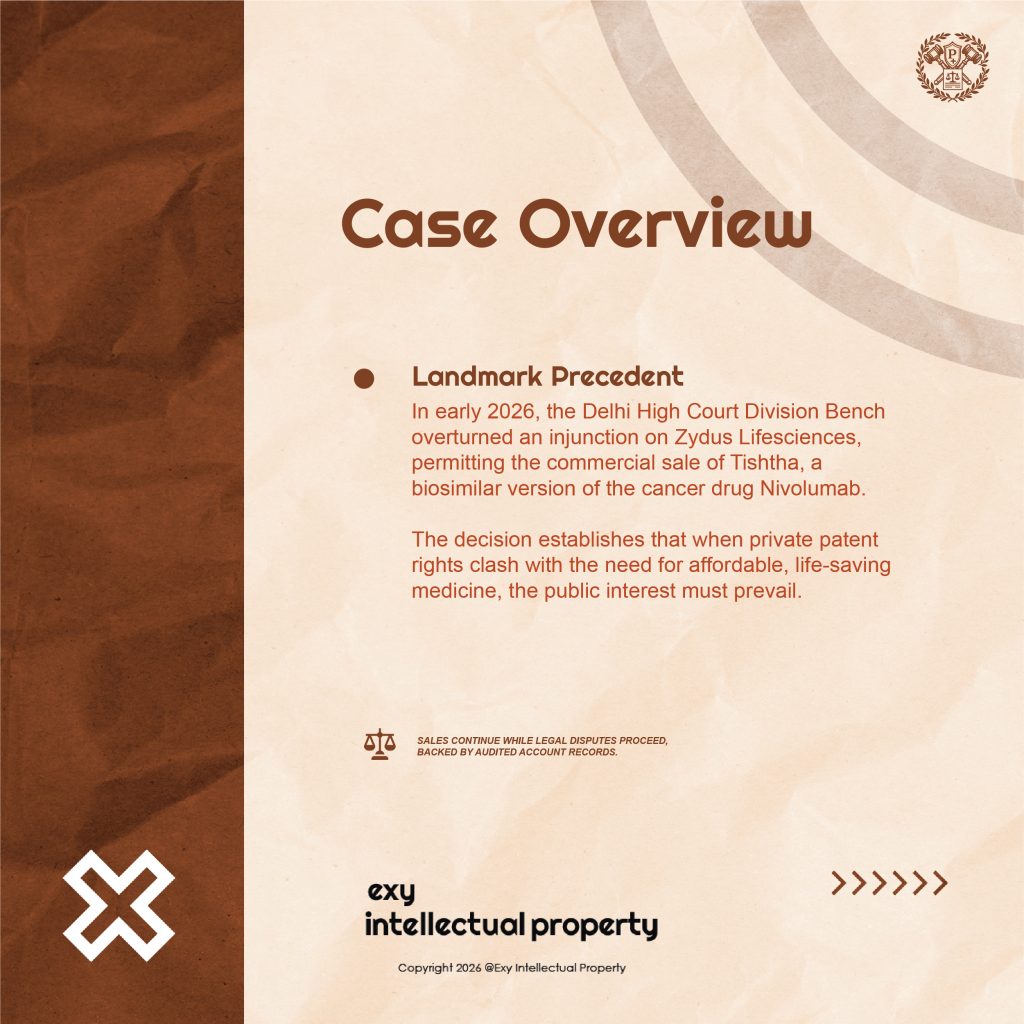
In the realm of pharmaceutical intellectual property, the intersection between exclusive patent monopolies and public health access represents one of the most intensely contested legal battlegrounds. In early 2026, a Division Bench of the Delhi High Court delivered a groundbreaking precedent by lifting a preliminary injunction against Zydus Lifesciences, allowing the domestic manufacture and market rollout of Tishtha—the world’s first biosimilar of the blockbuster cancer immunotherapy drug Nivolumab.
The Legal Architecture: Rethinking Injunction Standards in Life Sciences
The High Court’s decision shifts the traditional framework governing interim injunctions in pharmaceutical patent infringement suits, establishing critical jurisprudence for generic drug launches:
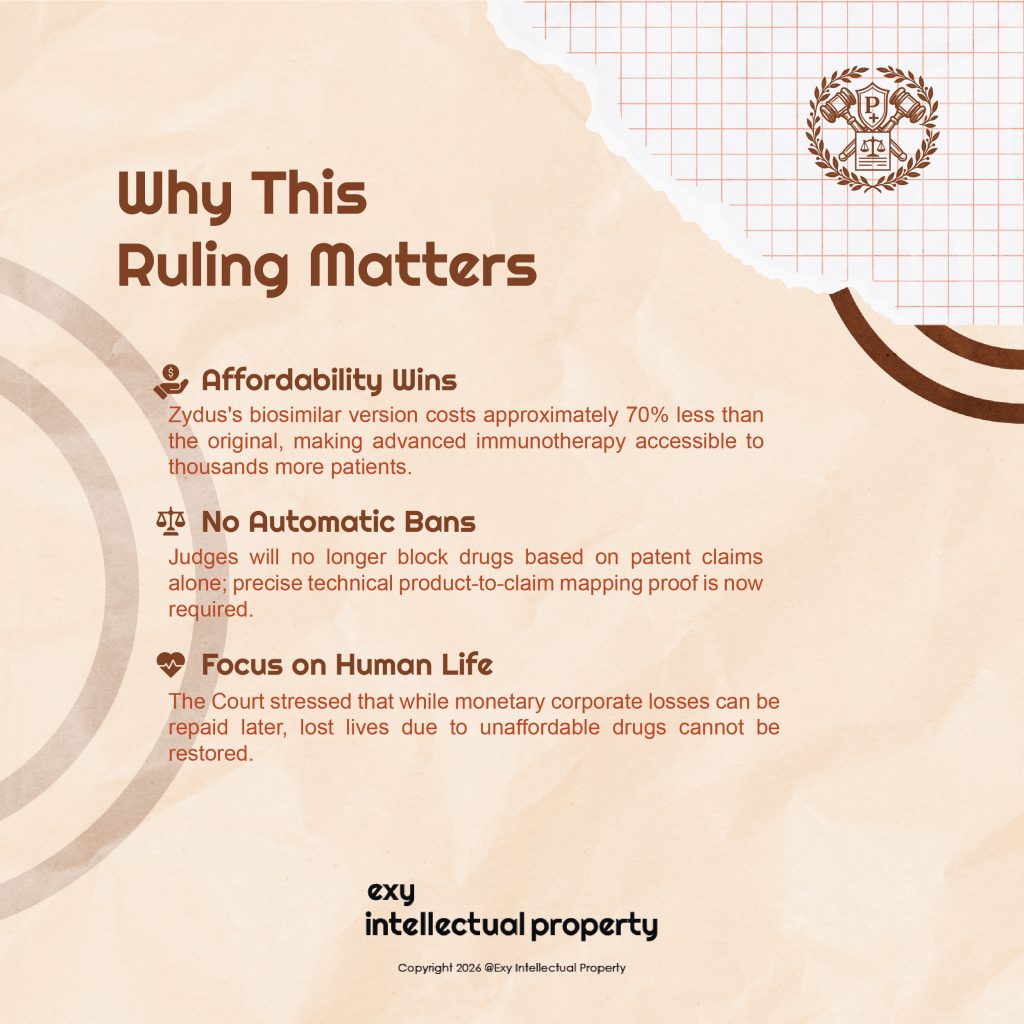
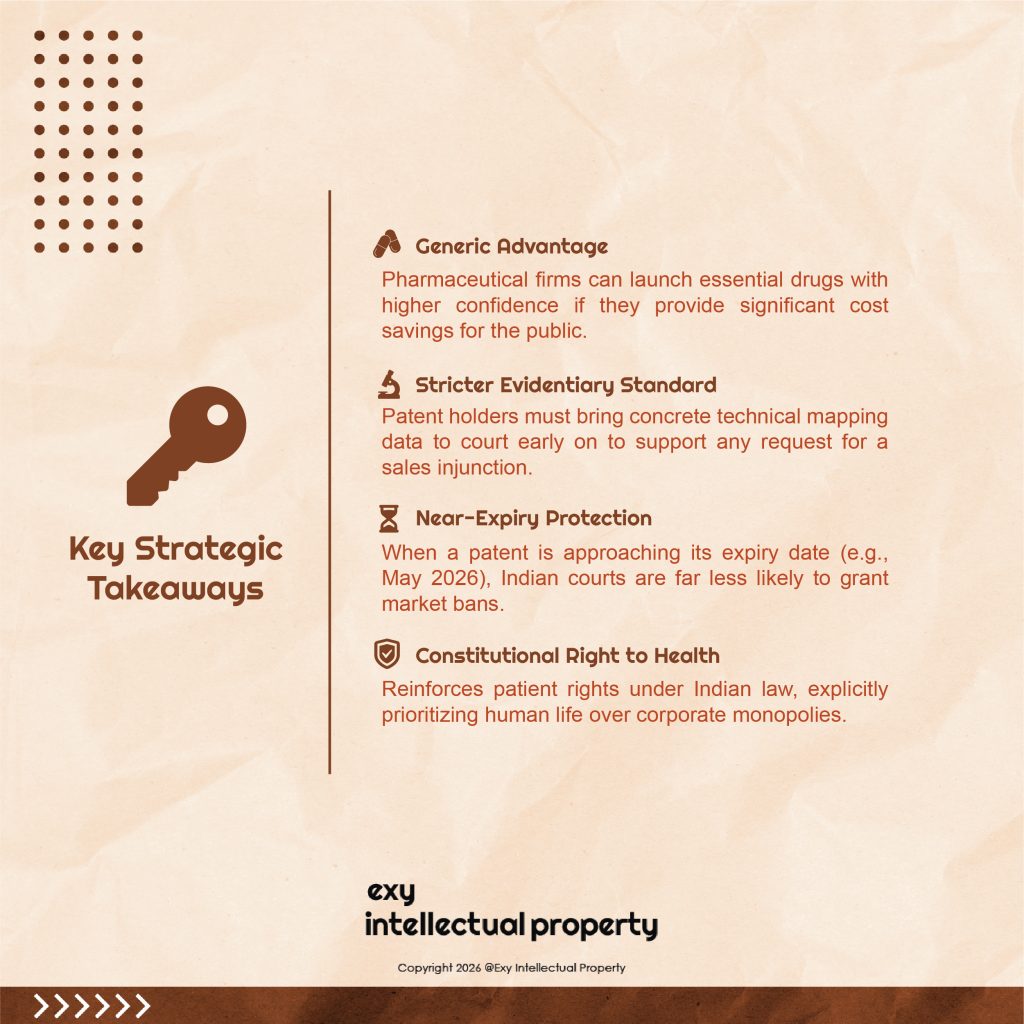
- Constitutional Right to Health & Public Interest Primacy: The Court reaffirmed that access to life-saving, affordable healthcare is tied to the constitutional Right to Life. Where commercial monetary losses can be quantified and compensated later, the loss of human lives due to unaffordable medication is irreparable.
- Shift Away from Automatic Injunctions: The ruling clarifies that a mere assertion of patent ownership is insufficient to automatically halt a competitor’s launch. Courts require rigorous product-to-claim mapping to prove prima facie infringement before issuing market-blocking bans.
- Proportionate Undertakings over Total Market Exclusion: Rather than enforcing total market exclusion—especially for patents nearing their statutory expiration (such as May 2026)—the Court implemented a balanced framework requiring the generic manufacturer to maintain audited accounts of all sales. This preserves the innovator’s potential financial damages while ensuring immediate market access.
- Dramatic Healthcare Economics: By introducing a biosimilar priced at roughly 25% of the innovator’s reference cost, the ruling dramatically improves patient access across critical immuno-oncology indications.
Strategic Blueprint for Life Sciences Brand Managers
To capitalize on evolving judicial standards and defend market entry across the “Pharmacy of the World,” generic manufacturers and innovator firms should adopt the following action plan:
Align IP Strategy with Public Health Realities: Frame legal arguments around consumer affordability and market necessity. Highlighting substantial price reductions strengthens the balance of convenience in courts evaluating interim injunctions.
Deploy Early Claim Mapping & Technical Audits: Generic developers must prepare comprehensive technical dossiers and product-to-claim mapping early in the pipeline to counter preliminary injunction applications effectively in court.
Leverage Near-Expiry Patent Windows: Assess competitive patent landscapes for impending statutory expiration dates. Courts are increasingly hesitant to grant drastic interim relief when a patent’s term is rapidly drawing to a close.
Establish Rigorous Accounting Protocols: Build clear, auditable tracking mechanisms for generic launches subject to ongoing litigation. Maintaining transparent financial records protects the enterprise against punitive measures while keeping distribution lines active.
#ExyIP #ExyIntellectualProperty #IPUpdate #IntellectualProperty #TrademarkLaw #IPknowledge