



The landscape of metabolic healthcare and chronic disease management across global markets experienced a historic shift on March 20, 2026. With the official expiration of Novo Nordisk’s key formulation patent in India (IN 262697), market exclusivity for Semaglutide—the active pharmaceutical ingredient behind Ozempic and Wegovy—came to an end. Following favorable interim rulings from the Delhi High Court, top domestic pharmaceutical leaders immediately launched affordable generic GLP-1 alternatives on March 21.
The Legal & Judicial Foundations: Freedom-to-Operate in India
The post-patent rollout of generic Semaglutide was catalyzed by several landmark judicial and regulatory determinations:
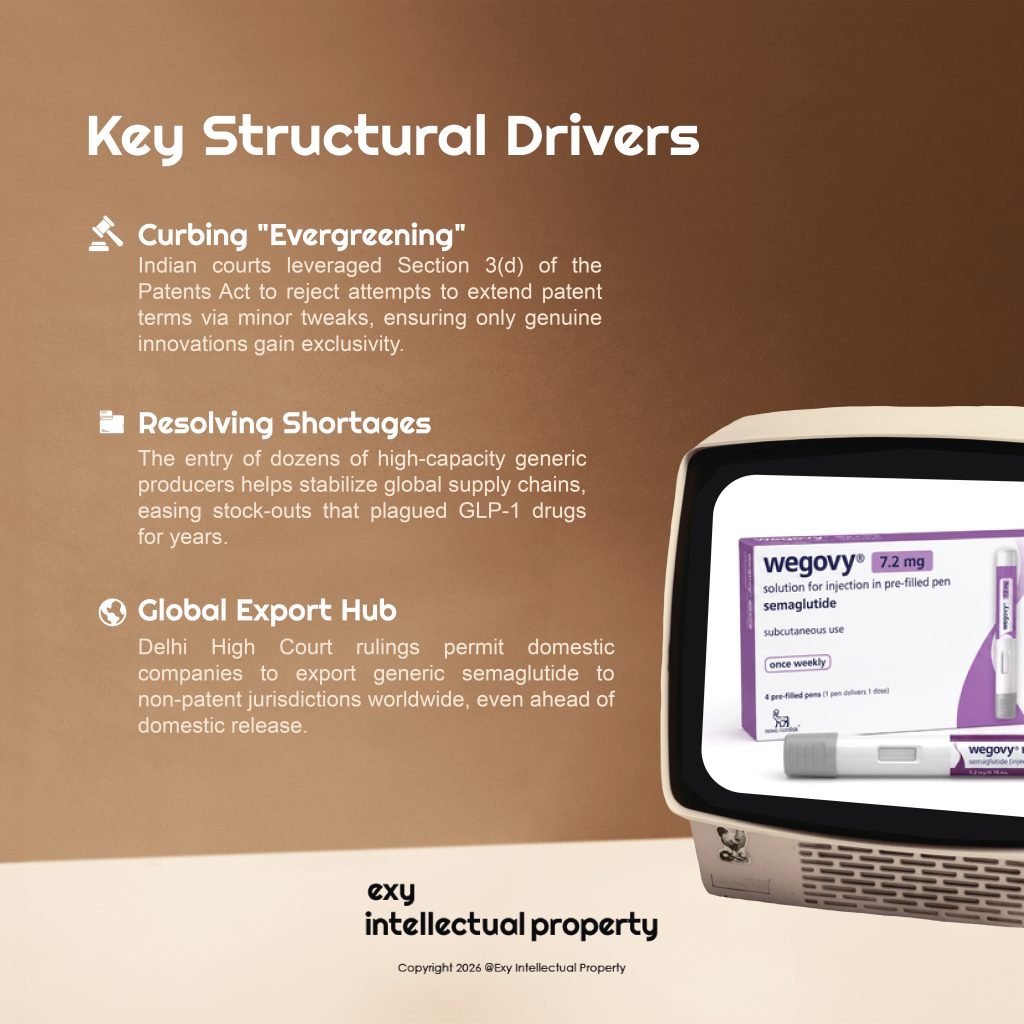
- Dismissal of Patent Extension Claims: Indian courts reaffirmed strict statutory thresholds against secondary “evergreening” attempts under Section 3(d) of the Patents Act, ensuring that basic formulation tweaks could not indefinitely extend market exclusivity beyond the March 20, 2026 barrier.
- Pre-Expiry Export Clearance (The Delhi High Court Ruling): In key decisions leading up to March 2026, the Delhi High Court permitted domestic pharmaceutical leaders to manufacture and export generic Semaglutide to non-patent jurisdictions prior to the domestic patent expiration. This established that domestic patent rights cannot be leveraged to block global supply chains targeting unprotected territories.
- Instant Market Demarcation: The expiration unlocked immediate domestic commercial launches. Leading pharma players—including Sun Pharma (marketing Noveltreat for weight management and Sematrinity for Type-2 diabetes), Dr. Reddy’s (Obeda), and Zydus—introduced DCGI-approved options at price reductions of 50% to 70% compared to original innovator pricing.
- Global Hub Capabilities: By establishing early production frameworks and bioequivalent pen-injector manufacturing systems, Indian generic manufacturers solidified their position as the primary global manufacturing hub for GLP-1 therapies targeting emerging markets.
Strategic Action Plan for Life Sciences Enterprises
To navigate the post-patent GLP-1 market and safeguard cross-border commercial opportunities, pharmaceutical brand managers should take the following steps:
- Perform Multi-Jurisdictional FTO Audits: Map local patent portfolios carefully. While India’s patent expired in March 2026, corresponding patents in major Western markets (such as the US and EU) remain active into 2031–2032. Ensure strict geographical isolation of export supply chains.
- Audit Device and Delivery IP: Patent protection often extends beyond the active pharmaceutical ingredient to auto-injector pens and delivery mechanisms. Ensure generic delivery devices maintain clear non-infringing designs.
- Establish Regulatory Compliance Trails: Maintain robust documentation confirming bioequivalence and DCGI approvals to mitigate post-launch regulatory or quality challenges from competitors.
- Leverage Non-Patent Market Windows: Deploy export-oriented manufacturing strategies to capture first-mover advantage in markets across South Asia, Africa, and Latin America where patent coverage has lapsed or was never granted.
#ExyIP #ExyIntellectualProperty #IPUpdate #IntellectualProperty #TrademarkLaw #IPknowledge