


The headline royalty rate does not tell the whole story. Calculating franchise royalties and fees also means understanding which sales form the payment base and how the franchise agreement treats deductions, fixed charges and minimums. The same stated rate can produce different royalty amounts when the agreement defines revenue differently.
It is reasonable to expect a percentage of sales to be straightforward. The key detail is what the contract counts as sales and whether it allows adjustments for items such as returns, discounts or taxes. A royalty fee is a recurring payment for the right to use intellectual property under a licensing agreement.
This guide explains what franchise royalties are, why franchisors charge them and how common calculation structures work. It also covers which revenue may count, what can affect the amount and how to read the relevant terms in a franchise agreement in Malaysia. With that foundation, you can assess how the royalty mechanism works alongside the franchise’s other obligations.
Key Takeaways
- Identify the royalty formula in the franchise agreement: it may use a percentage of sales, a fixed amount, a minimum, tiers or a combination.
- Distinguish ongoing royalty payments from the one-time initial franchise fee, since they serve different purposes.
- Read the agreement’s definition of gross sales carefully; it determines which transactions count and how adjustments are handled.
- Consider how support, other contract fees, sales thresholds and changes in sales volume may affect the royalty arrangement.
- Understand how the royalty terms fit with the intellectual property and business model being licensed before assessing the agreement as a whole.
What Revenue Is Included in Royalty Calculations?
The royalty base depends on the sales definition in the franchise agreement. Distinguishing gross sales, net sales and profit shows which adjustments can change the amount due. A clear method for calculating franchise royalties and fees starts with identifying that base.
Gross Sales as the Calculation Base
Gross sales or gross revenue can include receipts from goods, services and other products sold by the franchise business. The agreement’s definition matters because it determines whether a transaction enters the royalty calculation before expenses are deducted. For example, revenue from merchandise and services may count alongside sales of the franchise system’s core product if the contract includes them.
Read the defined base together with its exclusions and adjustments. Some agreements exclude sales taxes from the royalty base, while their gross-sales definitions may restrict deductions for taxes, returns, credits, allowances or other adjustments. Read these terms together. A sales tax collected on a customer transaction, for example, may be treated differently from a discount or refund.
Gross Sales Versus Net Sales
Gross sales record revenue before specified deductions, while net sales reflect deductions allowed by the contract. That distinction changes the base to which a royalty rate applies. If a store records a sale and later issues a refund, the agreement determines whether the refund reduces the royalty base for that period or is treated another way.
Gross revenue is also different from profit. Profit is calculated after business expenses, such as wages, rent or marketing, while a gross-revenue model applies the royalty to the defined sales base. A location can therefore owe royalties even when operating expenses leave little profit. The agreement, not the franchisee’s profit calculation, determines which basis applies.
When calculating franchise royalties and fees, match each sales category in the franchise’s records to the agreement’s definitions. Separate product sales, service revenue, discounts, returns, credits and sales taxes in the monthly records. Then identify which items the contract counts, excludes or permits as deductions. This makes the reporting method traceable and helps prevent an excluded transaction from being treated like ordinary sales.
Franchise systems may use different models, so the same transaction can be treated differently under different contracts. A delivery order, for instance, may count as a sale even when a platform processes payment; the agreement’s wording determines whether commissions reduce the royalty base. Marketing contributions may also have their own defined base, so do not assume their calculation follows the royalty clause.
When reviewing a reporting period, compare the sales summary with the contract’s terminology and keep supporting records for adjustments. If the agreement permits deductions, record each one under the relevant category rather than reducing total revenue without explanation. This creates a clear trail from recorded transactions to the royalty calculation.
Why Charge Royalty Fees?
Royalty structures shape how a franchisor receives ongoing revenue and how a franchisee’s payment responds to sales. The agreement sets the method, while the franchisor’s support model helps explain the ongoing charge.
Fixed-Amount Royalty Structures
A fixed-amount royalty is a set payment for each stated period, regardless of the franchisee’s sales. It gives the franchisor a predictable income stream and makes the franchisee’s obligation easier to forecast. The trade-off is that the payment does not fall when revenue declines. A set-dollar structure therefore places more sales risk on the franchisee than a percentage of revenue.
Franchisors may use royalty income to support administration, business development, training and ongoing assistance across the network. The arrangement ties the franchisee’s recurring payment to the rights and services described in the franchise agreement. It differs from an initial franchise fee, which is generally a one-time payment connected with starting the business. A disclosure document, where provided, should distinguish these obligations clearly.
Some systems do not charge an ongoing royalty. Instead, they may require franchisees to purchase products or services from the franchisor. This changes how the franchisor earns revenue, but it does not remove the need to understand the franchisee’s full contractual obligations. Assess the royalty clause alongside purchase requirements and other recurring charges to see how the arrangement works in practice.
Minimum and Tiered Royalties
A minimum royalty sets a payment floor, while a tiered royalty applies different rates to different sales bands. A minimum may require payment of the higher amount: the contractual floor or the royalty calculated from revenue. Tiered rates require separate calculations for each band, so the applicable rate may change as sales cross a threshold. Both structures can make the final payment less obvious than a single flat percentage.
The choice of structure depends on the commercial model and the support provided. A minimum can give the franchisor a baseline contribution during a slow sales period. Tiered rates can change the payment as revenue grows, while a fixed amount keeps it steady. The agreement should explain the period, calculation base and threshold treatment so both parties can understand what drives each payment.
To assess the arrangement, map each recurring obligation to its stated purpose: royalty, advertising contribution, required purchase or initial franchise fee. Then read the relevant agreement and disclosure terms together. If the business relationship includes a license to use intellectual property, carefully drafted licensing agreement terms can clarify the rights and payment structure.
What Is a Franchise Royalty Fee?
A franchise royalty fee is a recurring payment for the right to use intellectual property under a licensing agreement. It differs from an initial franchise fee, which is a one-time payment made when the franchisee enters the franchise agreement. The first supports access to the franchise system over time; the second is associated with joining and starting the franchise business.
For Malaysian franchise arrangements, the franchise agreement is the key document for understanding how royalties and other payments are calculated and when they are due. Review its payment terms alongside any disclosure documents provided, especially descriptions of recurring charges. Specific legal requirements depend on the arrangement, so do not treat a payment practice from another country as a Malaysian rule.
There is no single royalty rate that applies to every Malaysian franchise. Rates and payment methods can differ by industry, the support offered and the contract’s definition of the payment base. A percentage of revenue, a fixed amount or another agreed method may apply. The practical question is how the agreement defines the amount, period and sales or revenue included.
Payment frequency is also set by the agreement. Franchise royalties are commonly paid weekly or monthly, while some franchisees pay quarterly; the contract sets the applicable schedule. Reporting may follow the same period or have its own deadline, so distinguish when sales information is due from when payment must be made. That distinction helps a franchisee plan cash flow and reporting responsibilities.
Other obligations may sit alongside the initial franchise fee and ongoing royalty. Depending on the agreement, these may include advertising or marketing fund contributions, required purchases of products or services, and other specified charges. The agreement should identify each obligation and its calculation method. Separate recurring payments from one-time amounts to understand how they affect the franchise business over time.
The initial franchise fee is generally connected with getting the business started. It may cover initial training and other franchisor services that help establish the operation. Royalties, by contrast, recur during the franchise relationship and may support administration, business development, ongoing training and franchisee assistance. These payments serve different purposes, even when both appear in the same agreement.
To compare the obligations, group them by timing and purpose:
- Initial: the one-time franchise entry payment and startup-related services.
- Ongoing: royalties and any recurring advertising contributions.
- Conditional or operational: other charges or required purchases described in the agreement.
This distinction makes the franchise’s payment structure easier to assess without confusing a one-time entry payment with recurring royalties.
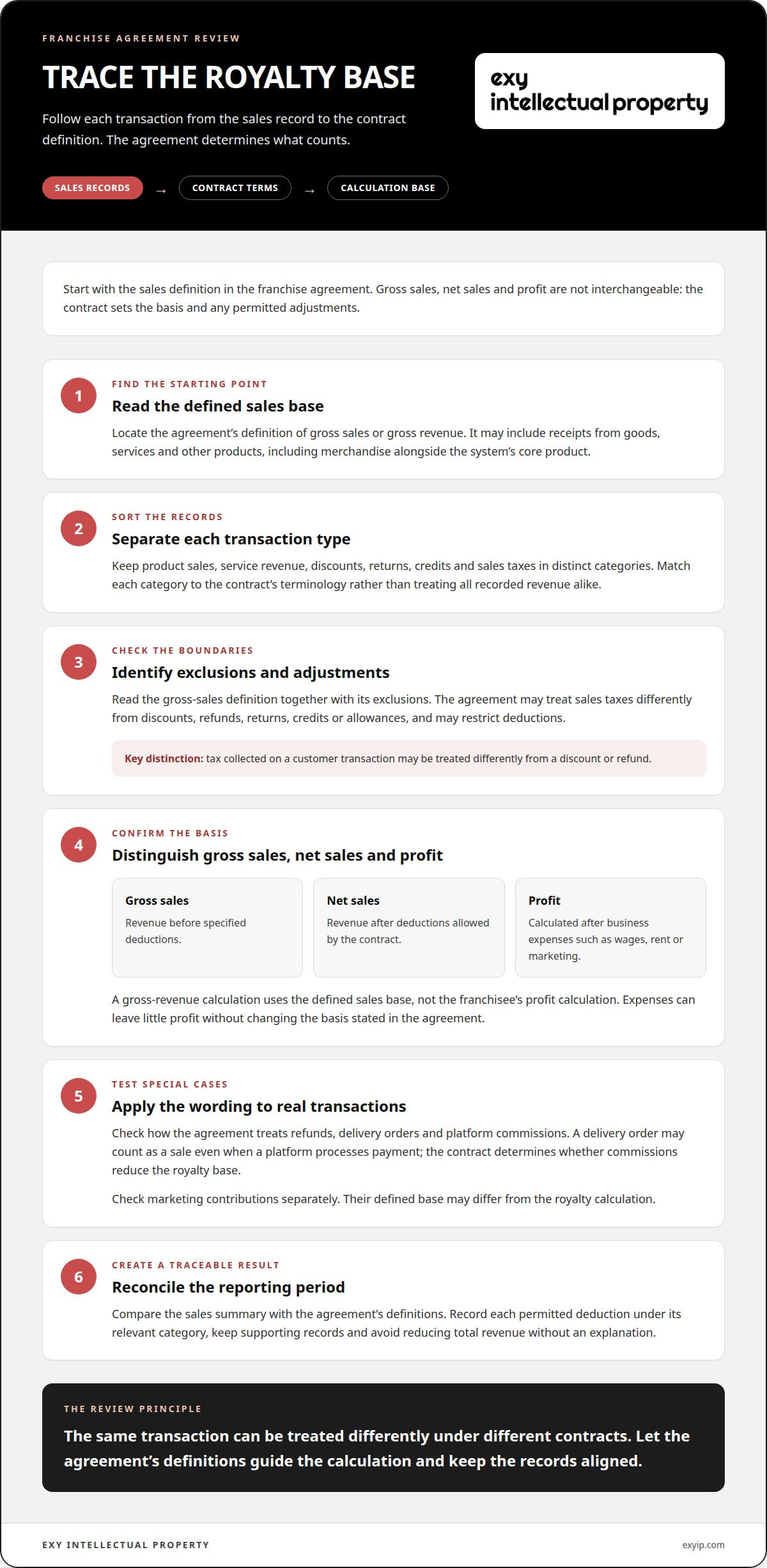
Gross sales and the items excluded from deductions
The royalty base depends on the sales definition in the franchise agreement. Distinguishing gross sales, net sales and profit shows which adjustments can change the amount due.
Gross Sales as the Calculation Base
Gross sales or gross revenue can include receipts from goods, services and other products sold by the franchise business. The agreement’s definition matters because it determines whether a transaction enters the royalty calculation before expenses are deducted. For example, revenue from merchandise and services may count alongside sales of the franchise system’s core product if the contract includes them.
Read the defined base together with its exclusions and adjustments. Some agreements exclude sales taxes from the royalty base, while their gross-sales definitions may restrict deductions for taxes, returns, credits, allowances or other adjustments. Read these terms together. A sales tax collected on a customer transaction, for example, may be treated differently from a discount or refund.
Gross Sales Versus Net Sales
Gross sales record revenue before specified deductions, while net sales reflect deductions allowed by the contract. That distinction changes the base to which a royalty rate applies. If a store records a sale and later issues a refund, the agreement determines whether the refund reduces the royalty base for that period or is treated another way.
Gross revenue is also different from profit. Profit is calculated after business expenses, such as wages, rent or marketing, while a gross-revenue model applies the royalty to the defined sales base. A location can therefore owe royalties even when operating expenses leave little profit. The agreement, not the franchisee’s profit calculation, determines which basis applies.
For a practical review, match each sales category in the franchise’s records to the agreement’s definitions. Separate product sales, service revenue, discounts, returns, credits and sales taxes in the monthly records. Then identify which items the contract counts, excludes or permits as deductions. This makes the reporting method traceable and helps prevent an excluded transaction from being treated like ordinary sales.
Franchise systems may use different models, so the same transaction can be treated differently under different contracts. A delivery order, for instance, may count as a sale even when a platform processes payment; the agreement’s wording determines whether commissions reduce the royalty base. Marketing contributions may also have their own defined base, so do not assume their calculation follows the royalty clause.
When reviewing a reporting period, compare the sales summary with the contract’s terminology and keep supporting records for adjustments. If the agreement permits deductions, record each one under the relevant category rather than reducing total revenue without explanation. This creates a clear trail from recorded transactions to the royalty calculation.
Factors affecting franchise royalty fees
A royalty depends on more than its stated rate. Industry economics, franchisor support and the franchise agreement’s other terms can all shape the payment. Calculating franchise royalties and fees also means considering how these factors interact, rather than viewing the rate alone.
Industry Differences in Royalty Fees
Industry differences reflect how a franchise earns income and what support its operating model requires. A food business may rely on frequent product sales, while a service franchise may earn revenue through booked work or ongoing contracts. Those models affect which sales can be measured and how the agreement defines the royalty base. Industry context can help explain the structure, but it does not determine a franchisee’s terms on its own.
Brand Differences in Royalty Fees
Brand differences arise from each franchisor’s chosen fee structure, support commitments and contract terms. Two brands in the same industry may set different royalty methods because one provides more ongoing training or business support, or uses different sales thresholds. The franchise agreement matters more than a broad industry comparison: it states the rate or method, payment period and conditions that affect the amount.
Support is a direct consideration. Franchise royalty fees commonly depend on the support the franchisor offers. Consider whether the agreement describes administration, business development, training or ongoing assistance, then read those commitments alongside the royalty clause. The relationship between payment and support is part of assessing the arrangement, not a substitute for understanding the calculation terms.
Other contract fees and volume thresholds can change the total obligation or how a royalty applies. A threshold may trigger a different rate or payment treatment once sales reach the stated level. Separate the royalty clause from advertising contributions and other recurring charges, then identify which sales measure each one uses. This reveals whether a stated royalty rate describes the full recurring payment or just one component.
Payment frequency also affects cash flow. If the agreement requires weekly reporting and payment, the franchisee must account for the obligation more often than under a monthly schedule. The period matters when sales fluctuate because each reporting window captures a different set of transactions. A clear schedule helps connect reported income to the correct calculation period.
Fixed royalties need their own review. Some franchisors may adjust a fixed amount under a provision in the franchise agreement. Read the adjustment trigger, timing and method together; a clause tied to sales volume has a different effect from one tied to another stated condition. These details show whether a fixed payment remains level throughout the franchise relationship.
For calculating franchise royalties and fees, assess the whole mechanism: industry model, support, thresholds, other charges, reporting frequency and adjustment clauses. For help structuring the intellectual-property terms behind a franchise relationship, explore licensing agreement support.
Exy Intellectual Property
Exy Intellectual Property helps businesses address intellectual property questions connected with a franchise’s brand, products or creative materials. When royalty terms involve the use of a trademark or other protected assets, understanding those rights can clarify what the agreement permits and covers.
Its relevant services include Legal Advisory and Trademark Registration, alongside Patent Filing, Industrial Design Registration and Copyright Voluntary Notification. These services can help franchise businesses develop or protect assets that form part of their commercial identity. The right focus depends on the intellectual property involved and the issue the business needs to resolve.
For questions about the intellectual property behind your franchise arrangement, contact Exy Intellectual Property to discuss your situation.
Make the Next Franchise Decision with Clarity
A royalty arrangement also reflects the value and use of the intellectual property behind a franchise. As you assess a franchise opportunity or plan a licensing relationship, consider how the brand, products and operating model fit together. This broader view can help connect the payment structure with the rights granted and the commercial aims of the relationship.
A considered approach to calculating franchise royalties and fees gives you a stronger basis for discussing terms and planning the business. The next step is to clarify which intellectual property supports the franchise and how the agreement describes its use. This can help frame a focused discussion about the commercial arrangement and the rights it depends on.
For guidance on the intellectual-property questions connected with your franchise plans, contact Exy Intellectual Property. Clear planning can support confident decisions as your business moves forward.
Frequently Asked Questions
How should royalty receipts be handled?
Record each royalty receipt against the relevant franchisee, reporting period and agreement. The franchisor’s records should show when payment arrived, which period it covers and how it matches the royalty statement. A franchisee should retain the related sales report and payment confirmation. Keeping these records together helps distinguish royalty receipts from advertising contributions and other payments, and makes timing differences or partial payments easier to resolve.
What Is a 5% Royalty in Business?
A 5% royalty means the payment is calculated as five percent of the base defined in the contract. The base might be eligible sales, revenue from specified activities or another agreed measure. The percentage alone doesn’t establish the amount due. The agreement also needs to define the calculation period, included transactions and any permitted adjustments, so the parties can apply the rate consistently.
How are franchise royalty fees calculated?
Apply the agreement’s royalty method to the sales or revenue base it defines for the relevant period. For a percentage formula, multiply eligible sales by the royalty rate; for a tiered formula, calculate each sales band separately before adding the results. Then apply any stated minimum or fixed component. Keep the calculation worksheet with its supporting sales report so each input can be traced.
Are franchise royalties calculated on gross sales or net sales?
Either basis may apply, depending on the franchise agreement’s wording. Gross sales generally means sales before deductions specified by the contract; net sales reflects permitted deductions. For example, a contract may define whether refunds reduce the base in the original sales period or when processed. Use the defined terms consistently in each reporting period rather than assuming ordinary accounting labels settle the royalty calculation.
How do minimum royalties and fixed monthly fees work?
A minimum royalty sets a payment floor, while a fixed monthly fee stays at its stated amount regardless of sales. If a contract requires the higher of a minimum or a percentage calculation, compare both results for that period and apply the stated rule. A fixed fee has no sales-based comparison unless the agreement adds one. Record which method applies before preparing each payment statement.
How are discounts, refunds, taxes, and delivery sales treated when calculating royalties?
The agreement’s sales definition controls each item. It may specify whether discounts reduce eligible sales, how refunds and credits are recorded, and whether sales taxes are excluded from the base. Delivery transactions can count as sales even when a platform processes payment; the contract determines how any platform commission is treated. Keep transaction details separate in the sales records, then apply the relevant clause consistently.