


A successful outlet is not automatically a franchise system. To expand through franchisees, a business needs operating methods that others can follow, a consistent customer experience and a brand prepared for use across locations. Franchising consultancy Malaysia can help business owners assess these requirements and turn proven know-how into a structured growth plan.
If you’re considering franchising, start by asking whether another operator could deliver your core offer without relying on your daily decisions. Operating procedures, training, franchise documents and brand rights all need to fit together. In Malaysia, a trademark must be registered with the national intellectual property office before an application for franchise registration can be made, so working with experts like Exy Intellectual Property ensures intellectual property belongs in early planning.
This article explains how franchising consultancy can help you assess readiness, document operations and plan the franchise package and support for franchisees. It also covers how trademarks and licenses relate to a franchise agreement, and what to prepare before a strategy discussion. A clear framework helps you identify the work ahead and build a franchise system around your business priorities.
Key Takeaways
- Franchising consultancy Malaysia can help established business owners assess whether their operating model is ready to be replicated.
- A planning framework can move from concept assessment to documented operations, a defined franchise package and a plan for franchisee support.
- Understand how a trademark, a license and a franchise agreement serve different roles in a franchise relationship.
- Assess a consultancy engagement by clarifying its scope, deliverables, decision-makers and alignment with your business priorities.
- Prepare for expansion by defining your aims, organizing business information and identifying intellectual property questions early.
When does a business need franchising consultancy in Malaysia?
Franchising consultancy helps a business assess, structure and prepare its model for replication through franchisees. Unlike general business coaching, it focuses on whether another operator can deliver the offer consistently, and what systems, planning and brand considerations expansion will require. For an established owner exploring franchise-led growth, franchising consultancy Malaysia can turn an initial idea into a practical readiness assessment.
This is different from seeking a franchise opportunity as a prospective franchisee. The focus here is on preparing a business to offer a repeatable model. A basic overview of the relationship between franchisors and franchisees is available in What is franchising?
What signals that a business may be ready to franchise?
Readiness starts with repeatability. Can the core offer and customer experience be delivered to the same standard across locations, even when the founder isn’t present? If staff rely on informal instructions or the owner’s day-to-day decisions, the operating methods may need to be clarified before expansion.
Look for clear procedures, consistent service standards and a practical way to support another operator. These are useful indicators to assess, not proof of future success. Franchise growth also depends on execution, market demand and the strength of the relationship with franchisees.
What can a franchising consultant help a business address?
A consultant can help evaluate the business proposal, develop the franchise concept and shape a business plan around the intended expansion. This work can expose gaps such as procedures that exist only in the founder’s experience, unclear expectations for franchisee support, or brand and intellectual property questions that need attention as the business grows.
Practical questions include:
- Which parts of the customer experience must remain consistent?
- What operating knowledge needs to be documented for another owner to follow?
- What support will franchisees need to apply the model?
- How should brand protection and licensing fit into the expansion plan?
Structured advice connects these questions to business priorities, rather than treating franchising as a paperwork exercise. Exy Intellectual Property’s franchising consultancy brings business planning together with intellectual property and licensing considerations, so brand strategy can be addressed alongside the operating model. Consultancy supports planning and preparation; legal advisory and IP litigation address intellectual property rights and related disputes.
How franchising consultancy turns a business concept into a repeatable model
A franchise concept needs more than a successful outlet. It needs clear operating methods that another owner can understand and follow. Franchising consultancy Malaysia can organize the work into a practical sequence, linking business decisions with the systems required for replication.
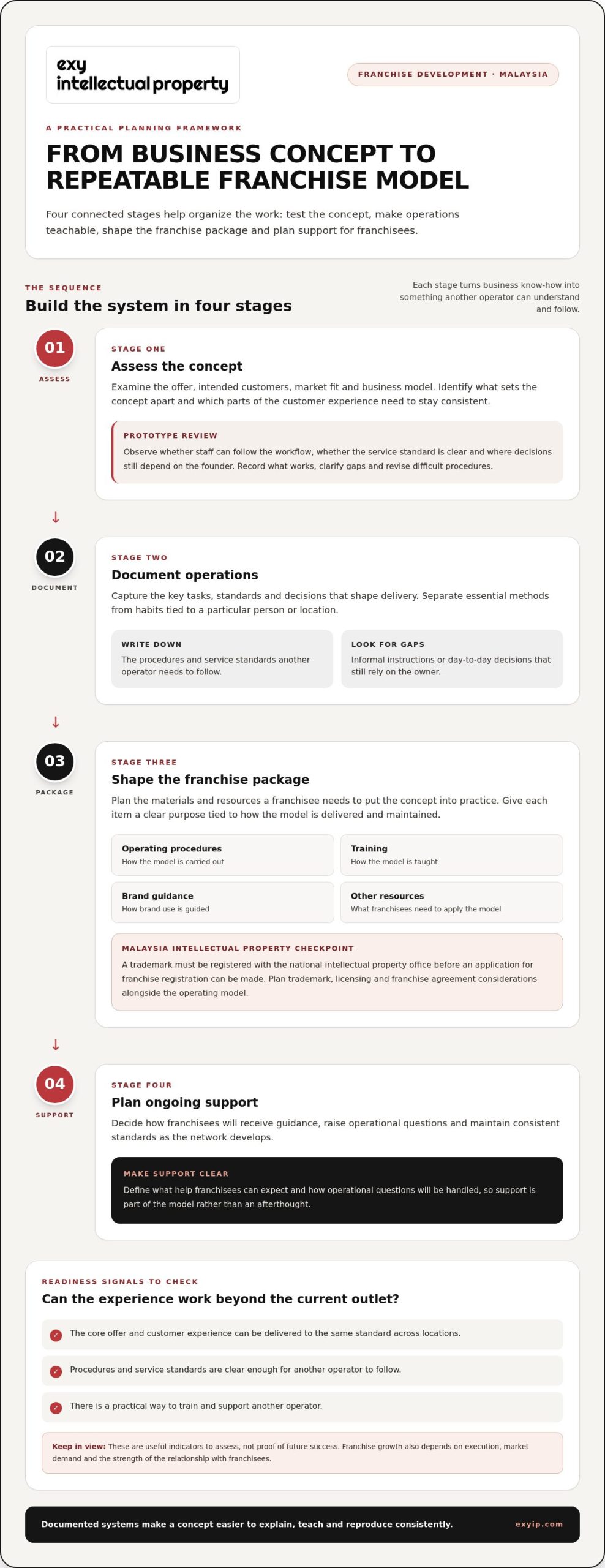
Use these four stages as a planning framework:
- Assess the concept. Examine the offer, intended customers, market fit and business model. Identify what sets the concept apart and which parts of the customer experience need to stay consistent.
- Document operations. Capture the key tasks, standards and decisions that shape delivery. Separate essential methods from habits that depend on a particular person or location.
- Shape the franchise package. Plan the operating procedures, training, brand guidance and other resources a franchisee would need to apply the model.
- Plan ongoing support. Decide how franchisees will receive guidance, raise operational questions and maintain consistent standards as the network develops.
Documented systems make a business concept easier to explain, teach and reproduce consistently.
From business proposal to tested franchise concept
Start with practical questions: who is the intended customer, what need does the offer meet, and what makes the business model workable beyond its current setting? Assess the concept’s distinctive features alongside the experience, quality and operating principles that should remain consistent.
A prototype review can test assumptions before wider replication. Observe whether staff can follow the proposed workflow, whether the service standard is clear and where decisions still depend on the founder’s judgement. Record what works, note where staff need clarification and revise procedures that are difficult to follow. The Malaysian Franchise Association (MFA) provides a Malaysia-focused industry reference for businesses exploring franchise development.
What belongs in a practical franchise package?
Plan the materials and support a franchisee will need to put the concept into practice. These may include operating procedures, training, brand guidance and a defined approach to ongoing support. Each item should answer a practical question about how the model is delivered and maintained, rather than add paperwork without a clear purpose.
Clear documentation makes expectations easier to communicate and apply. For wider strategic context on aligning franchise growth with intellectual property, read this franchise consultancy guide. Exy Intellectual Property’s franchising consultancy connects concept development with operational planning and intellectual property considerations.
How to align franchise agreements, trademarks, and licenses
Franchise growth involves related but distinct elements: the brand customers recognize, permission to use relevant intellectual property, and the agreement that sets out the wider business relationship. Planning them together helps ensure that the rights granted match the operating model the franchisee is expected to follow.
Intellectual property means legal rights that protect creations of the mind, such as inventions, designs and artistic works. In a franchise, the brand is often the most visible asset, but the business should also consider how its protected assets and operating knowledge fit into the franchise relationship. Franchising consultancy Malaysia can bring these questions into planning early.
| Element | What it does | Business purpose |
|---|---|---|
| Trademark | A sign that distinguishes a business or its products from others. | Helps identify the brand used across franchise locations. |
| License | Permission granted by a licensor to a licensee to use specified intellectual property. | Defines permitted use of a particular asset, such as a brand element. |
| Franchise agreement | A contract granting the right to replicate a brand’s business model and expand its presence. | Addresses the broader franchise relationship and the rights and expectations connected with operating the model. |
What does a trademark protect in a franchise model?
A trademark distinguishes a business or its products from others. In a franchise system, it helps customers identify the brand across locations. Plan how franchisees may use the name and other brand signs, and how that use should stay consistent. This supports a coherent customer experience and the identity the business has built.
Registration is an important part of brand strategy, but it shouldn’t be treated as a guarantee of protection in every situation. The scope and use of rights matter too. For Malaysia-focused registration context, see this trademark registration guide for Malaysia.
How do licenses relate to a franchise agreement?
A license gives permission to use an identified asset under agreed conditions. A franchise agreement covers a wider relationship: the right to replicate a business model, use the brand and operate within the franchise arrangement. A license may form part of that relationship, but it doesn’t by itself explain the full franchise system.
For planning, map each brand or other intellectual property asset to its intended use, then consider how that permission fits with the wider franchise terms. The documents should reflect the intended business arrangement and applicable requirements. Aligning these elements helps keep brand permissions and franchise expectations clear.
How to assess a franchising consultancy engagement
A useful engagement starts with your business, not a generic expansion template. Before work begins, agree on the result you need, the decisions to be made and the material the consultancy will produce. Franchising consultancy Malaysia can connect franchise planning with intellectual property and licensing, helping you assess growth as both an operating model and a brand relationship.
What should the consultancy process clarify?
Start with three essentials: the business concept, your expansion objective and the operating information already available. Are you preparing to replicate an established location, refining a model that varies across outlets, or exploring whether franchise-led growth fits your aims? The answers help shape the work around your business’s stage and priorities.
Clarify how the work will address these connected areas:
- Operational: Which procedures, service standards and support arrangements need attention?
- Brand: How should franchisees present and use the business identity consistently?
- Intellectual property: Which assets, trademark questions or licensing arrangements should inform the expansion plan?
Agree on the scope, expected deliverables, decision-makers and how recommendations will reflect your model. Exy brings franchise planning together with intellectual property strategy and licensing, so these questions can be considered alongside business priorities rather than handled in isolation.
How can a business prepare for useful strategic advice?
Organize the information you already have. Brand materials, operating procedures, training resources and business-model information give the discussion a practical starting point. They don’t need to be perfect. Note what is complete, what remains informal and what is still being developed to help pinpoint where more work may be needed.
Decision-makers should agree on the expansion aim and identify unresolved questions. For example, clarify which parts of the customer experience must stay consistent, what support a franchisee will need, and how brand use should fit within the intended relationship. Shared priorities help keep the discussion focused.
Use this checklist to prepare:
- What business concept are you considering for replication?
- What outcome do you want the engagement to support?
- Which operating and brand materials are available now?
- Who needs to contribute to decisions?
- Which intellectual property or licensing questions remain open?
- What deliverables and next steps should the agreed scope address?
Organized information helps focus strategic discussions. To discuss how franchise planning can align with your business and intellectual property priorities, Discuss your franchise strategy with Exy.
Plan your next steps with franchising consultancy in Malaysia
Franchise planning is easier to direct when you know what growth should achieve and how the business should operate through franchisees. Define the model and intended franchise relationship, then organize the information and questions that will help set priorities. Franchising consultancy Malaysia connects business planning with intellectual property considerations, putting brand strategy into the expansion discussion from the outset.
What information can a business organize before planning?
Gather existing materials that explain how the business works. A useful starting set may include:
- Current brand identifiers, such as the business name and signs used to identify its products or services.
- Operating procedures, training materials and other guidance used to deliver the customer experience.
- A plain-language description of the core business model, its customers and how the offer is delivered.
- Notes on which parts of the experience should remain consistent across franchise locations.
These materials don’t need to be polished to be useful. They show what is established and where procedures, brand guidance or support plans may need further work. A public-facing planning discussion doesn’t need to disclose confidential business details; keep sensitive materials for an appropriate private discussion.
What should happen after the initial strategy discussion?
Use the discussion to agree on priorities and a scope suited to the business’s model and stage of development. One business may first need to clarify operating readiness; another may need to focus on franchise documentation or questions about its trademark and other intellectual property.
A practical next-step sequence is:
- Define the expansion aim. Clarify what franchise-led growth is intended to achieve.
- Organize business information. Bring together the materials that explain the model and customer experience.
- Identify intellectual property questions. Note which brand assets and permissions may need attention in the proposed franchise relationship.
- Set priorities. Agree which operational, documentation and IP matters should be addressed first.
Exy’s franchising consultancy and intellectual property advisory bring these planning areas together, helping business owners make informed decisions about the next stage. Strategic preparation can clarify the model, open questions and priorities. Explore franchising consultancy with Exy.
Build your franchise plans on a clear foundation
Franchise growth starts with a business model that can be explained, repeated and supported beyond the founder’s daily involvement. A structured planning process helps identify what to document, how franchisees should deliver a consistent customer experience and which brand and intellectual property questions to address before expansion.
The franchise agreement, trademark and license each have a distinct role. Aligning them with the way the business operates helps set clear expectations for franchisees and supports the brand’s long-term value. Franchising consultancy Malaysia brings operational and intellectual property considerations into one growth plan.
Exy provides franchising consultancy and IP strategy, including advice on licensing agreements, trademarks and IP commercialization. Clarify your expansion aims, identify open questions and decide which priorities need attention first. Discuss your franchising strategy with Exy to plan the next stage of a structured franchise system.
Frequently Asked Questions
What does a franchising consultant do in Malaysia?
A franchising consultant helps assess whether a business model can be replicated and what preparation franchise-led growth may require. The work can include evaluating the business concept, developing the franchise model and planning operating systems and franchisee support. In Malaysia, franchising consultancy Malaysia can also consider how trademarks, licenses and other intellectual property relate to the proposed model. This strategic guidance supports planning but doesn’t guarantee regulatory approval or commercial success.
When should a business consider franchising its operations?
Consider franchising when the business can deliver its core offer and customer experience consistently, and explain its operating methods to another operator. Documented processes show how key tasks and service standards are maintained without relying on the founder’s daily decisions. There’s no single readiness threshold for every business. Treat consistency, clear procedures and a workable support plan as signs to assess, not proof that franchising will succeed.
How does a franchise agreement differ from a license?
A franchise agreement sets out a broader business relationship, including the right to replicate a brand’s business model and expand its presence. A license is permission granted by a licensor to a licensee to use specified intellectual property under agreed conditions. A license may relate to brand use within a franchise, but it does not by itself describe the full operating relationship. The documents should reflect the arrangement the parties intend to establish.
Does a business need to protect its trademark before franchising?
Trademark protection belongs in franchise planning because the brand is often central to how customers recognize the business across locations. Assess which names, signs or other brand identifiers franchisees may use, and how that use should align with the intended relationship. In Malaysia, a trademark must be registered with MyIPO before an application for franchise registration can be made. Early trademark planning helps identify the work to address before expansion.
What information should I prepare before a franchising consultancy discussion?
Prepare a clear description of your business model, intended customers, core offer and expansion aims. Gather available brand materials, such as names and signs, along with operating procedures, training resources and notes on how the customer experience is delivered. Mark which processes are documented and which still depend on informal knowledge. This gives the discussion a practical starting point and helps identify operational, brand and intellectual property priorities.
Can intellectual property form part of a franchise strategy?
Yes. Intellectual property can be part of franchise strategy because the business needs to consider how its brand and other protected assets relate to franchisee operations. A trademark helps distinguish the business or its products; a license grants permission to use specified intellectual property. Other relevant rights may also matter, depending on the concept. Aligning these considerations with the franchise model supports clearer brand use and a more coherent expansion plan.
How long does franchising consultancy take in Malaysia?
The time required depends on the engagement’s scope, the business’s stage and the information available. An assessment of a defined concept may involve different planning needs from work that also addresses operating systems, franchise documentation, brand questions and licensing. There isn’t one timeframe that applies to every business. Agreeing on the priorities and scope at the outset helps set a practical direction for the work.