

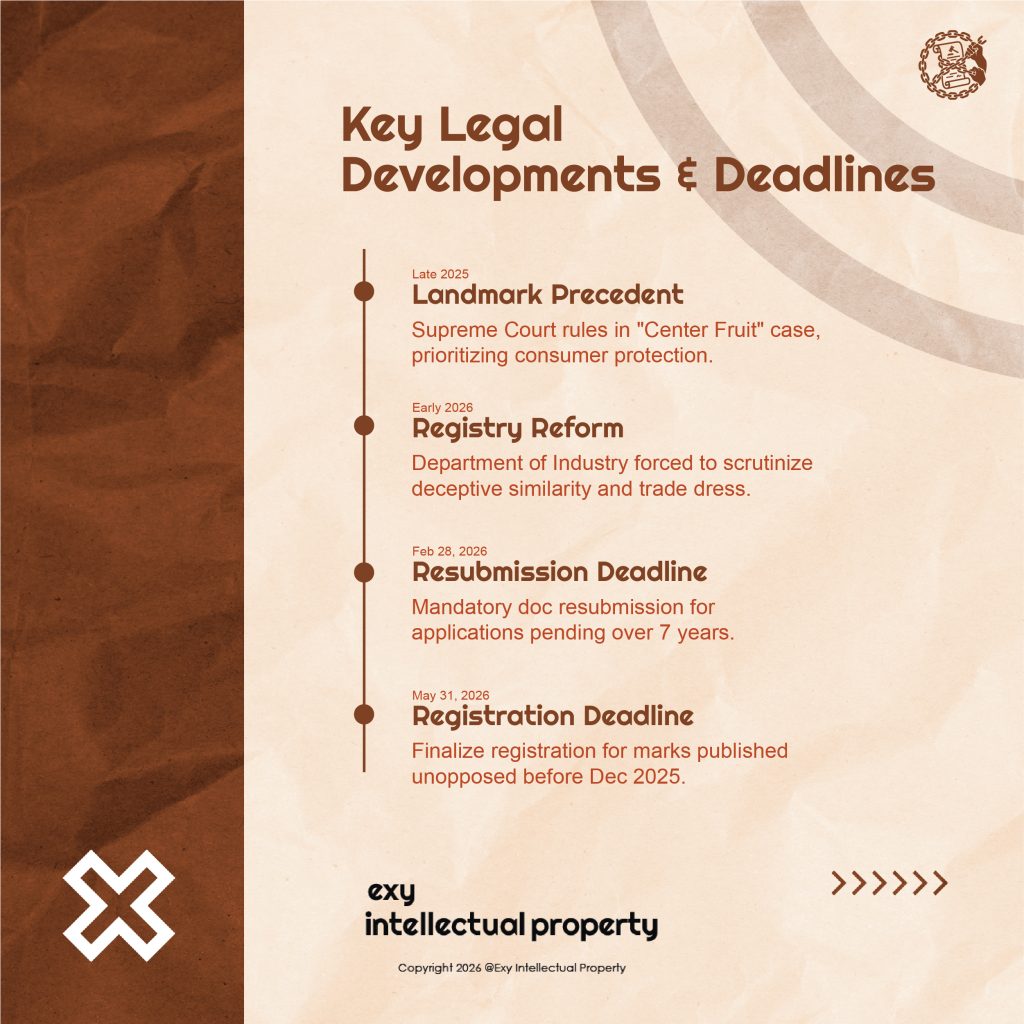
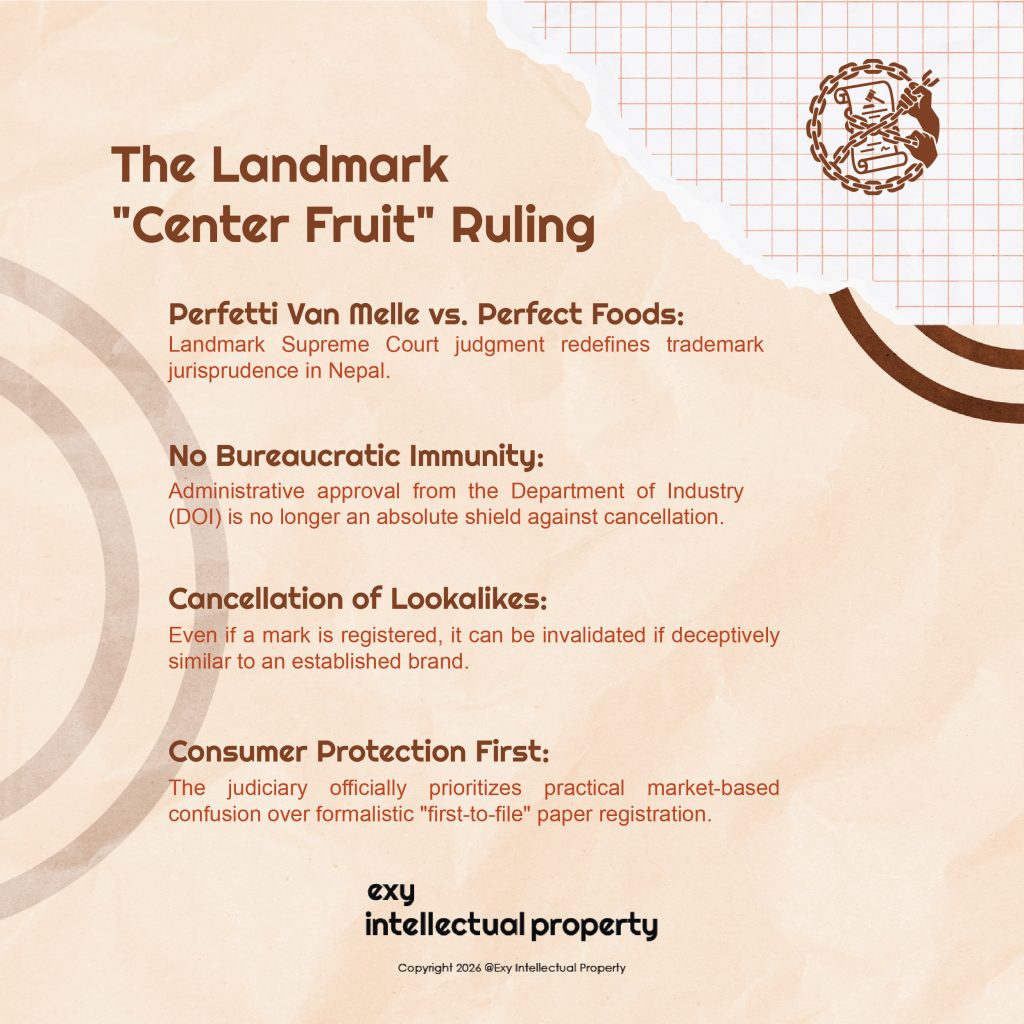
In emerging South Asian trade corridors, securing brand equity is undergoing a fundamental transformation. In late 2025 and early 2026, the Supreme Court of Nepal issued several landmark decisions—most notably in the Center Fruit (Perfetti Van Melle S.P.A. v. Perfect Foods Pvt. Ltd.) dispute—that significantly elevate the legal standard for trademark protection. Overturning legacy administrative approvals, the Court established that a Department of Industry (DOI) registration certificate is no longer an absolute shield against cancellation if a mark creates deceptive similarity or consumer confusion in the marketplace.
The Judicial Evolution: Key Takeaways from the Center Fruit Ruling
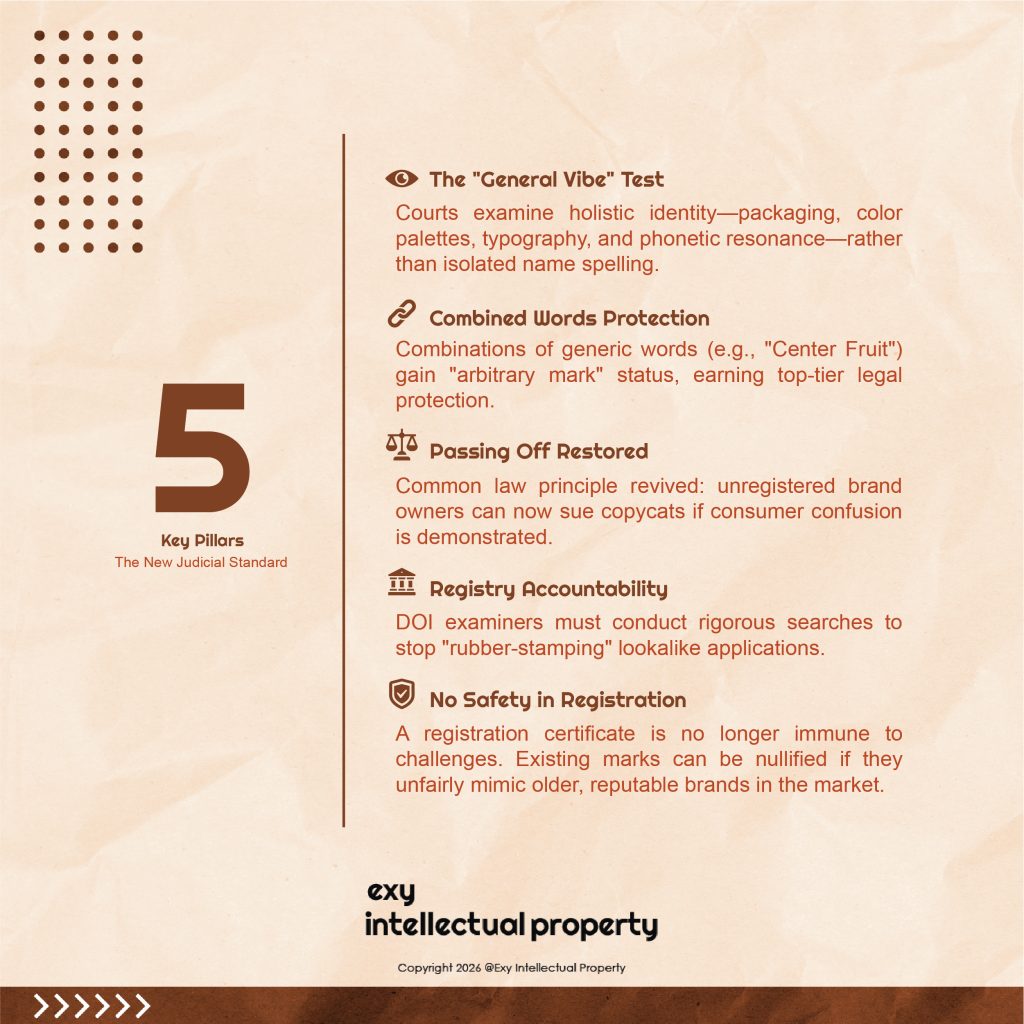
The Supreme Court’s ruling redefines Nepalese intellectual property jurisprudence, shifting enforcement from a rigid “first-to-file” registry formality to a practical, consumer-protection framework:
Vulnerability of Registered Copycats: A granted registration certificate no longer guarantees permanence. Prior rights holders can petition to nullify deceptively similar registrations under Section 18(3) of the Patent, Design, and Trademark Act.#ExyIntellectualProperty #Nepal #IPLaw #Trademarks #BrandProtection
Holistic “General Vibe” Assessment: The Court established that deceptive similarity must be evaluated by looking at overall commercial impression. Beyond spelling or name variations, visual get-up, packaging style, color schemes, font choices, and “phonetic resonance” are key to determining confusion.
High Protection for Combined Words: Rejection of the argument that generic or descriptive terms lose protection when combined. While words like “Center” or “Fruit” may be common individually, their conjunction (“Center Fruit”) creates a distinctive, arbitrary mark entitled to strong protection.
Re-establishment of Passing Off Rights: The Court reinforced common law “Passing Off” principles, allowing brand owners to challenge deceptive imitations even without prior domestic registration if they can prove goodwill, reputation, and a likelihood of consumer confusion.
Administrative Registry Accountability: The Department of Industry (DOI) faces heightened scrutiny regarding “rubber-stamped” approvals. Examiners are mandated to conduct comprehensive searches into prior market reputation and potential commercial conflict.
ExyIntellectualProperty #NepalIP #SupremeCourtNepal #CenterFruit #TrademarkLaw #DeceptiveSimilarity #PassingOff #BrandProtection #SouthAsiaIP #LegalUpdate2026 #IPStrategy