

What if a logo your customers trust suddenly appears on another business’s products or social media? Protecting my logo from being copied starts with understanding that one kind of protection may not cover every risk. A logo can function as a trademark, identifying your business in the market, and as an original artistic work protected by copyright.
Trademark and copyright serve different purposes. Trademark protection can help address confusing commercial use, while copyright concerns unauthorised copying of the artistic work itself. In Malaysia, official trademark registration is handled through the national intellectual property office, while copyright protection for an original artistic work is automatic when it is created in material form.
This guide explains how the two forms of intellectual property protection can work together, what to preserve if you spot a copy, and how to assess possible next steps. It also covers how trademark filing, copyright voluntary notification and professional legal advisory from Exy Intellectual Property can support a practical brand-protection plan, including when another party has permission to use your logo under a license.
Key Takeaways
- A copied logo can blur your brand identity and leave customers unsure which business they’re dealing with.
- Trademark and copyright protect different aspects of a logo, so assess how each may apply to your business.
- Protecting my logo from being copied starts with a planned approach. Trademark registration can support protection, but it can’t guarantee that copying won’t happen.
- If you spot a copy, preserve dates, URLs, screenshots, product materials and relevant correspondence before deciding what to do next.
- Trademark filing, copyright voluntary notification and legal advisory can help you manage your logo rights and assess possible response options.
Why protecting your logo from being copied matters to your business
A logo helps customers recognise your business across packaging, websites, social media and other points of contact. If another business uses a similar logo, that recognition can become less reliable. Customers may be unsure who is behind a product or page, and your brand may become harder to distinguish from others.
A resemblance alone doesn’t establish that someone has infringed your rights. The context matters: how each logo is used, what goods or services it represents, and whether customers could be confused. Protecting my logo from being copied starts with identifying what the logo does for your business and which rights may apply.
What can happen when another business copies your logo?
Similar branding can make customers pause, misdirect enquiries or associate another business’s products with yours. Repeated use of a similar design may also make your own logo less distinctive in the market. These are possible commercial effects, not proof of infringement. The facts and applicable rights need to be assessed.
Illustrative example: A Malaysian food business finds a similar emblem on another seller’s delivery page. A customer places an order believing the sellers are connected. That scenario could raise concerns about customer confusion, but it doesn’t establish whether the use is unlawful.
What does logo protection mean in practice?
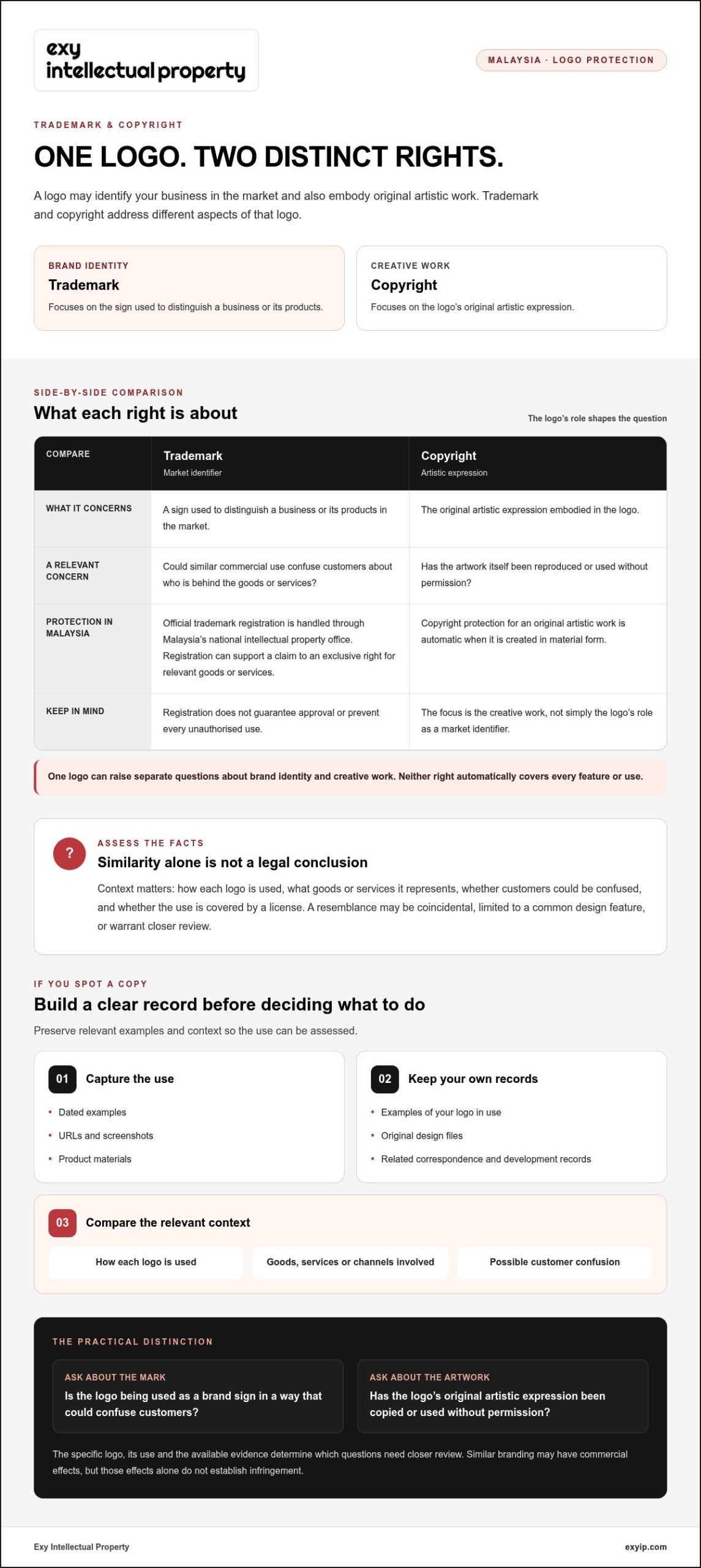
Protection is a considered process: identify relevant rights, keep records showing how and when the logo is used, and assess the facts before responding. A trademark focuses on a sign used to distinguish a business or its products. Copyright may apply to the logo’s original artistic expression. One logo can therefore raise separate questions about brand identity and creative work.
In Malaysia, copyright is governed by the Copyright Act 1987 (Malaysia). The right route depends on the logo, its use and the concern you’re trying to address. A resemblance may be coincidental, limited to a common design feature, or part of use that warrants closer review.
A trademark is a sign which distinguishes a business or its products from others. This definition highlights its commercial role: helping customers identify the source of goods or services. Copyright, by contrast, concerns the original creative work itself. Neither label provides a complete answer without considering the specific logo and circumstances.
Build a clear record by keeping dated examples of your logo in use, such as product packaging, advertising and website materials. These examples can help show how the logo functions as a brand identifier and provide context if a concern arises. Keep original design files and related records organised as well.
- Identify where and how your logo appears in commerce.
- Keep clear records of the logo’s use and development.
- Compare the specific designs and the goods, services or channels involved before drawing conclusions.
This guide provides general information, not a legal conclusion about a specific dispute. Assessing the relevant rights and evidence can help a business decide what steps are appropriate without assuming that every similar logo creates a legal claim.
How trademark and copyright protection apply to a logo
A logo can serve two roles at once: it can identify the source of a business’s goods or services, and it can be an original creative work. Trademark and copyright protection address those different roles. Both may be relevant, but neither automatically covers every feature or use of a logo.
| Right | What it concerns | Practical relevance |
|---|---|---|
| Trademark | A sign used to distinguish a business or its products in the market. | Relevant when assessing use of a logo as a brand identifier, including whether similar use could confuse customers. |
| Copyright | The original artistic expression embodied in the logo. | Relevant when assessing whether the artwork itself has been reproduced or used without permission. |
For protecting my logo from being copied, the useful question is not simply which right is stronger. Ask what was used, how it was used, and what evidence connects the logo to your business or its creator. A similar brand sign may raise a trademark issue; copying the artwork may raise a copyright issue. The facts determine which questions deserve closer review.
What can trademark protection do for a logo?
A trademark helps distinguish one business or its products from others. Registration can provide a route to seek an exclusive right in the mark for relevant goods or services, but it doesn’t guarantee approval or prevent every unauthorised use. The effect and scope of a registration should be assessed against current Malaysian law and the application. A Trademark Registration in Malaysia guide can help explain how to plan that step.
Registration strategy should reflect how the logo is used, including the products or services associated with it. If a business uses a logo across distinct commercial activities, consider whether its protection plan addresses those uses. For general information about trademarks and international systems, see the World Intellectual Property Organization (WIPO) on Trademarks.
Unregistered Logo Protection via Passing Off
If a logo is copied before formal trademark registration is granted by MyIPO, a business with established local goodwill can seek legal remedies under the common law tort of Passing Off. To succeed in a passing off claim, the business must establish three key elements: recognized local goodwill in the logo, deceptive misrepresentation by the competitor, and actual or prospective commercial damage to the brand.
When might copyright also be relevant?
Copyright may be relevant to original artistic expression in a logo, rather than its role as a market identifier. Check how Malaysian copyright rules apply to a particular logo against current law before relying on them. Copyright is not a substitute for trademark protection, and its existence alone doesn’t guarantee a particular remedy if someone copies a design.
Ownership also needs careful attention. A business may have commissioned a logo, but documents and facts about who created the artwork and what rights were agreed can matter. Keep design briefs, drafts, final files, invoices or agreements, and written permissions together. This record can help clarify the relationship between the creator and the business if questions arise.
When another party has permission to use the logo, a clear license can set out the scope of that use. If you’re weighing registration or responding to suspected copying, trademark filing and intellectual property legal advisory can help assess the rights and evidence relevant to your situation.
Is registration necessary to protect a logo from being copied?
Using a logo and registering a trademark are not interchangeable. Using it helps customers encounter and recognise your brand; registration is a formal step that may support a planned approach to protecting that brand identity. Neither using a logo nor registering it guarantees that another business will never copy or resemble it.
For a business considering protecting my logo from being copied, it helps to separate three questions. Who owns or controls the relevant rights? What records support that position? And what response, if any, is appropriate if another party uses a similar logo? Registration addresses one part of the picture. By itself, it doesn’t resolve every ownership or evidence issue, or determine the outcome of a dispute.
Statutory Evidence via Voluntary Copyright Notification (Section 26A)
While copyright arises automatically upon creation in material form, copyright owners can file a Voluntary Notification of Copyright with MyIPO under Section 26A of the Copyright Act 1987. Obtaining an official MyIPO notification certificate establishes prima facie proof of copyright ownership and creation date in Malaysian courts, significantly strengthening enforcement against art thieves and logo copycats.
What should a business weigh before seeking registration?
Start with the logo’s role. Is it consistently used to identify your business or particular goods and services, or is it still an occasional design element? Consider where it appears and which commercial activities it represents. These details help shape a protection plan and inform the scope to consider when preparing an application.
Think about whether the design is stable, too. If it changes often, consider whether the version in current use is the one you intend to build recognition around. A refreshed logo may be a sound business decision, but different versions can raise questions about which design the plan should focus on and how use is documented.
Application details and the scope sought require careful assessment under current Malaysian requirements. Don’t assume that submitting an application secures every possible use of the logo, or that registration automatically covers a substantially different design or unrelated commercial activity. The appropriate approach depends on the mark and the application’s details.
How should you think about protection beyond registration?
Keep a practical record of the logo’s history and use. Save dated design drafts and final files, briefs and agreements with the creator, and examples showing the logo in business materials. Organise records so you can connect a particular version with the relevant use and period. This may help clarify ownership questions and provide context if concerns arise.
Registration doesn’t remove the need to pay attention to how your brand appears in the market. If you notice a possible copy, document what you see and compare the use before deciding how to respond. A measured review can help distinguish a meaningful concern from a superficial resemblance. Consider ownership, evidence and possible responses in light of the specific facts and current Malaysian law.
Registration sets a protection step; ongoing brand management keeps your records, use and response aligned. Maintain clear evidence, review changes to the logo and consider permissions when another party is authorised to use it. Legal advisory can help assess how these elements fit together without treating registration as an automatic solution.
Exy’s trademark registration and legal advisory support can help businesses plan protection around their logo and review relevant rights and records.
What to do if someone is copying your logo
Finding a similar logo can be unsettling. Pause before responding publicly or sending a demand. A visual resemblance is a reason to investigate, not a legal conclusion. A calm, step-by-step review helps preserve useful evidence and gives you a clearer basis for deciding what to do next.
A practical approach to protecting my logo from being copied is to move through these steps in order:
- Preserve evidence. Capture the suspected use and record where and when you found it.
- Compare the uses. Look at the logos, the goods or services, and the customer-facing context.
- Assess business impact. Consider whether customers may be confused or your brand is being affected.
- Seek advice. Review the evidence, ownership and relevant rights before deciding on a response.
How can you document suspected logo copying?
Save dated screenshots and copies of relevant webpages, listings, advertisements or product materials. Record the URLs, the date you accessed each item and, where possible, the surrounding context. For physical goods or packaging, take clear photographs and retain relevant materials. Preserve correspondence connected to the suspected use, including customer messages that may show how people understood the brands.
Keep your own records together as well. Original artwork files, drafts, creation records and dated examples of your logo in use can help show the design’s history and how it appears in your business. Keep files in their original form where possible, and note when and where each example was collected. Good organisation makes later review more efficient.
What should you assess before responding?
Compare the signs carefully, but don’t treat visual similarity alone as decisive. Consider the overall impression, the goods or services associated with each logo, and where customers encounter them. A similar symbol used in a different context may raise different questions from a close copy used to sell related products through the same channels.
Look for evidence of actual customer confusion, such as a misdirected enquiry or a message asking whether the businesses are connected. Its presence or absence doesn’t settle the issue, but it may help describe the practical impact. Also consider whether the other party may have permission to use the logo, for example under a license.
Before making accusations, threatening legal action or posting publicly, have the relevant rights, records and circumstances assessed. An incorrect or premature response can complicate a business dispute. Malaysian legal analysis should be based on current law and the specific facts, including the status of any trademark rights and who created or owns the artwork. The appropriate next step depends on that assessment.
Exy’s intellectual property legal advisory can help assess evidence and possible response options. Request legal advice on suspected logo copying before deciding how to proceed.
How Exy can help protect and manage your logo rights
Once you’ve identified the logo, gathered relevant records and considered how it’s being used, the next step is to turn that information into a practical plan. Exy Intellectual Property supports businesses with trademark registration and filing, copyright voluntary notification, legal advisory and intellectual property litigation. The right combination depends on your brand, the rights involved and whether you’re planning ahead or responding to a concern.
From logo assessment to trademark protection
Trademark support begins with understanding the role your logo plays in identifying your business and its goods or services. Exy’s trademark registration and filing services can help you plan an approach to protecting that brand identity. The application’s scope and details need careful attention, and registration cannot guarantee that others won’t imitate a logo or that a dispute will have a particular outcome.
A sound plan also considers how the business uses the logo. For instance, a company may use one version on product labels and another in digital advertising. Reviewing those uses can help clarify what the business wants its trademark strategy to address. Exy’s Malaysia trademark registration guide explains the registration process in more detail.
Copyright voluntary notification may also be relevant when a logo is an original artistic work. It sits alongside, rather than replacing, consideration of trademark protection. Records about the artwork’s creation and the rights agreed with its creator can help inform how the business manages and protects the logo.
Assessing a suspected copy and response options
If another business appears to be using your logo, Exy’s intellectual property legal advisory can help assess the available evidence, relevant rights and possible response options. The assessment can consider how the marks are used, which goods or services are involved, and the potential impact on your business. Where a dispute calls for formal legal action, Exy also provides intellectual property litigation support. The appropriate path depends on the specific facts and applicable law; no registration or legal process guarantees a particular result.
This support can bring the evidence and business priorities into the same discussion. Prepare a clear record of the logo’s use, the suspected use and any relevant communications, then consider next steps with those materials in view. A measured assessment is more useful than reacting before the rights and circumstances are understood.
Using a logo through a license or commercial arrangement
A license is permission for another party to use intellectual property under agreed terms. If you allow a distributor, partner or other business to use your logo, licensing agreements can define the authorised use and support more controlled brand management. Clear terms can address practical matters such as where the logo may appear and which approved version the other party should use.
Whether you’re planning trademark protection, reviewing a suspected copy or setting terms for permitted use, Exy can support the next step through its intellectual property services. Discuss logo protection with Exy.
Make logo protection part of your business plan
Your logo’s role can change as your business grows. A new product line, a rebrand or a commercial partnership may affect how the logo is used and where your brand appears. Treat these moments as opportunities to review whether your protection plan and business records still reflect your current direction.
This habit can make protecting my logo from being copied less of a last-minute reaction and more of a considered business decision. Keep ownership documents and approved logo versions organised, and revisit them when your branding or commercial arrangements change. If another business’s use raises concerns, a clear record can help you move from uncertainty to informed next steps.
Every brand has its own history, use and priorities. Exy can help you consider a strategy suited to your logo and business objectives. Discuss a strategy for protecting your logo with Exy, and take a confident next step in managing your brand.
Frequently Asked Questions
Can I protect my logo from being copied without registering it?
Some protection may be available without trademark registration, but it depends on the rights and circumstances involved. Copyright may be relevant to original artwork, while trademark registration is a separate route for protecting brand identity. Neither guarantees that copying will stop. A Malaysian business should review who created the logo, the terms agreed with the creator, how the mark has been used and what protection is being sought. Get advice on any unregistered-rights argument under current Malaysian law.
Does copyright protect a business logo in Malaysia?
It may protect original artistic expression in a logo, but the precise position depends on the work and current Malaysian law. A practical question is whether the disputed use reproduces the artwork itself, rather than merely adopting a similar idea or theme. If a designer created the logo, review the agreement and surrounding circumstances to understand who holds the relevant rights. Check claims about ownership, duration or enforcement against current law before relying on them.
What should I do if another business copies my logo?
First, avoid changing, deleting or publicly circulating material that may be relevant. Keep a clear record of what you found and when, then prepare a short chronology of the suspected use and any business effects, such as a misdirected enquiry. Don’t assume a resemblance proves wrongdoing. An intellectual property review can help assess the rights and whether a proportionate response is appropriate before you approach the other business.
How can I prove that I created my logo first?
There’s no single document that automatically proves creation or ownership. Build a chronology from the earliest available drafts, file records, communications with the creator and the agreement governing the work. Preserve original files rather than relying only on exported images or later-edited copies. The strength of each item depends on its context and how it fits with the rest of the record, so an assessment may need to consider the complete history.
Can I register a logo as a trademark in Malaysia?
Yes, a business may seek trademark registration for a logo used to distinguish its goods or services, subject to applicable requirements and examination. Before filing, settle which version represents the brand and identify the goods or services the application should cover. Consider whether the business uses different versions or plans to extend into new activities. Exy’s Malaysia trademark registration guide covers the registration process.
Should I send a legal notice when someone copies my logo?
A legal notice can be one possible response, but it isn’t an automatic first step. Before sending one, establish the specific use you’re concerned about, your basis for claiming rights and the outcome you want to seek. A case-specific legal review can help ensure that any communication is accurate and proportionate. Avoid public allegations or threats while those points remain unclear, as they can escalate a dispute without resolving the underlying issue.
Can another business use my logo if I give it permission?
Yes. A written license can define the permission in practical terms, such as which logo version may be used, on what materials, through which channels and for what period. It can also set out any approval process or limits the parties agree to. Clear boundaries help both sides understand the arrangement and reduce uncertainty as the business relationship develops. Exy provides licensing agreement support for businesses managing intellectual property.